UFP • Health services
The Fernando Pessoa University (UFP) and the Fernando Pessoa Higher School of Health (ESS-FP) combine, in the spaces of the teaching clinics, a dual operational aspect. On the one hand, the promotion of health and the respective provision of care and, on the other hand, the academic and curricular aspect, which allows students from the courses of the Faculty of Health Sciences, the Faculty of Human and Social Sciences (Psychology) and the Higher School of Health to carry out supervised clinical practice with patients under an informed consent system.
Also within the scope of health services, the University Hospital of Fernando Pessoa presents itself as a provider of general and specialized health care, ensured by professionals of excellence.
We distinguish ourselves by the services we provide, but above all by the way we provide them. The humanisation of services is our main characteristic and it is through it that we make a difference!
CLÍNICA PEDAGÓGICA e UAAPS
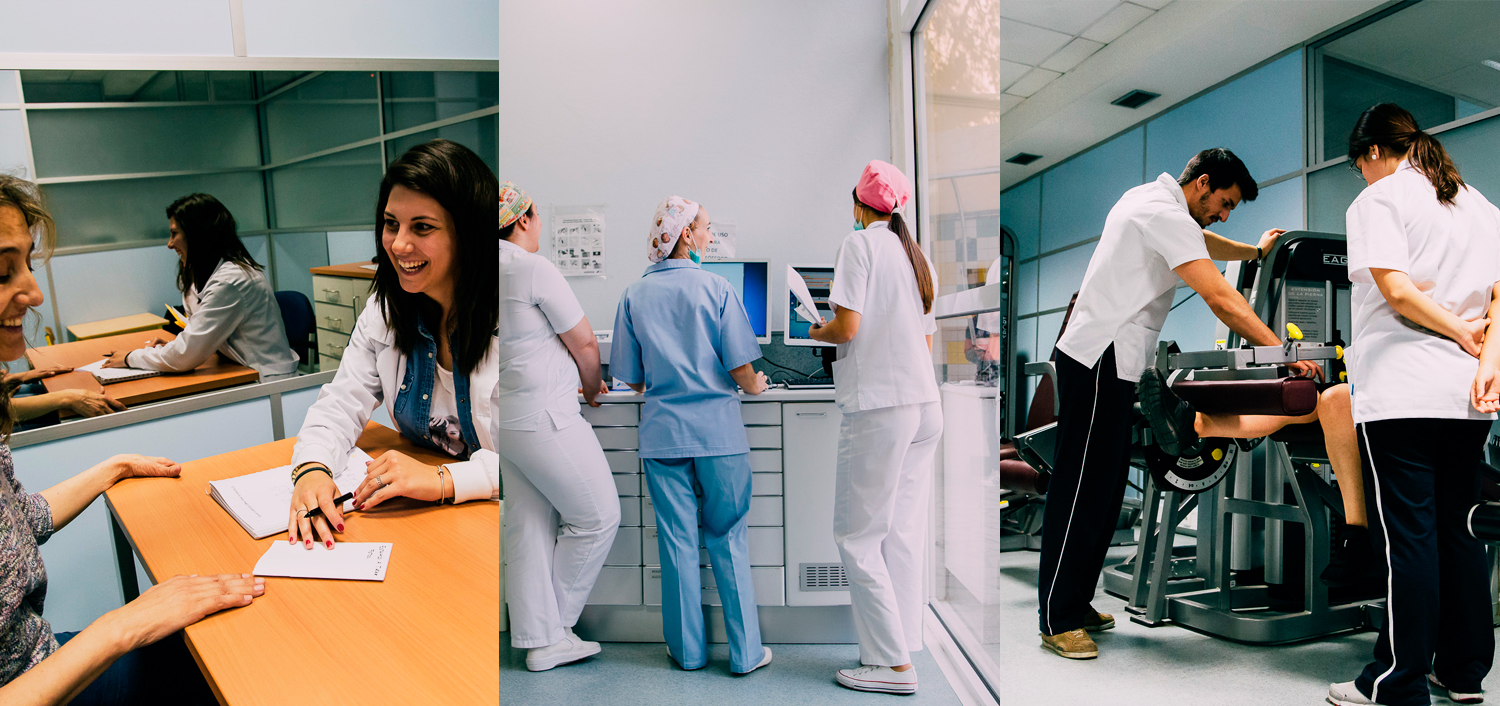
DENTAL TEACHING CLINIC
Clinical teaching and its relationship with the community.
The Dental Medicine Teaching Clinics of the Faculty of Health Sciences of the Fernando Pessoa University (CPMD FCS-UFP) include the clinical care of patients in some areas of Dentistry, which are part of the curriculum of the respective Integrated Master's degree.
The main objective of these clinics' activities is teaching/learning/professional training. However, this activity creates a close link between the University and the Community, since support is simultaneously provided to the community in the area of prevention, treatment and oral rehabilitation.
This service begins with a screening consultation for all patients, where, under the guidance of the responsible professor, a clinical history is drawn up, a diagnosis of the patient's situation is made, their needs are assessed, and a treatment plan is defined for each patient, who is then referred to the area of care they require.
This service aims to provide treatments in specific areas: Restorative Dentistry, Oral Surgery, Oral Medicine, Prosthodontics, Endodontics, Periodontics, Pediatric Dentistry, Orthodontics, and Occlusion. These are areas where students begin and develop their clinical practice after acquiring knowledge in basic subjects and clinical simulation classes.
Clinical teaching at CPMD FCS-UFP has perfectly defined objectives:
• To enable the Dentistry student to: establish a positive Dentist/patient relationship, motivate patients towards oral health, integrate and apply in their clinical activity all the knowledge and skills acquired in their previous training, establish indications for therapeutic alternatives and sequential treatment plans, establish clinical criteria for success/failure, and motivate themselves for their improvement and continuous training.
• To provide society with a socially responsible dental service that promotes public health from a university teaching perspective.
• Obtain epidemiological information.
• To develop experimental studies applying techniques and materials.
The final training of a dentist must enable them to perform the functions defined in European standards.
• To carry out prevention, diagnosis and treatment activities related to anomalies and diseases of the teeth, mouth, jaws and related tissues.
• To prescribe medications, prostheses, and products within the scope of their professional practice.
Within the scope of social responsibility, the CPMD of UFP have established some protocols that allow for the care, in their facilities, of users who do not have the economic resources to maintain good oral health.
These protocols were established with social solidarity entities, some private social solidarity institutions (IPSS), the Portuguese League Against Cancer, the Porto City Council, and nine parish councils in the city of Porto. These users receive primary oral health care treatments, thus restoring masticatory function and aesthetics, directly contributing to the improvement of their systemic health and self-esteem. These are users who, due to their economic and social conditions, would not otherwise have access to this healthcare.
Clinical Director CPMD-FCS
Sandra Gavinha
Carlos da Maia Street, 296
4200-150 Porto • Portugal
T. (+351) 22 507 1332
(calls to national landlines)
Physiotherapy Master's Degree (Master's in Physiotherapy)
The Physiotherapy UAAPS occupies an extensive area comprising physiotherapy and electrotherapy gymnasiums, with direct access to both the indoor swimming pool and the therapeutic pool, as well as a gym equipped with the latest models of weight-training machines and accessories of the utmost importance for the final phase of physical rehabilitation. The CPF renews itself each year as an innovative project and one of the few at a European level that combines theoretical, theoretical-practical and practical teaching in a clinical environment, with patients of the most varied ages and clinical specialities.
Students, starting from the 2nd year of their degree, have the opportunity here to integrate a multidisciplinary team, to learn and practice theoretical, theoretical-practical and practical concepts, to develop professional skills, to learn and practice ethical principles, and also to develop human and personal capabilities, shaping a specific character unique to those who intend and choose to work as healthcare agents.
The CPF is seen by students as an asset in their academic journey, developing clinical reasoning early on in the process of individual and holistic patient assessment, followed by the drawing up of the treatment plan and subsequent therapeutic intervention, while also giving them the opportunity to be part of an environment conducive to scientific research.
Access to NIF for Service Users
The user, with a clinical indication, should contact the secretariat of the Paediatric Physiotherapy Clinic (cpf@fundacaofernandopessoa.pt) and make the respective booking.
An initial assessment is carried out, based on which the objectives and treatment plan are defined, as well as the number and frequency of physiotherapy sessions. The patient will undergo a reassessment whenever their clinical situation requires it.
Informed Consent
All service users who make use of CPF's Physiotherapy services must sign the informed consent form, expressing their wish to voluntarily participate in the teaching/learning process of the clinical training of Physiotherapy students, which takes place under the supervision of Physiotherapist Lecturers.
Objectives for the students
– To allow integration into a multidisciplinary team, highlighting the role of interpersonal relationships in the working world;
– Provide contact with the professional environment, its advantages, limits and difficulties of the future profession;
– To develop ethics and a sense of professional responsibility;
– Enable deeper contact with service users from a wide variety of backgrounds;
– To allow autonomy in Physiotherapy assessment and the development of clinical reasoning, in order to establish objectives and a properly substantiated intervention plan. This will be put into practice to develop competences at this level;
– To develop skills in recording assessments, in order to monitor the user's clinical progress and schedule adjustments to the objectives and treatment plan based on their evaluations.
ESS-FP
334 Delfim Maia Street
4200-253 Porto • Portugal
T. (+351) 22 507 1384 (calls to national landline network)
cpf@fundacaofernandopessoa.pt
Time: Mon to Fri: 08:00-20:00
Coordination: Adérito Seixas • Nuno Ventura
Psychology undergraduate association
Fernando Pessoa, investing in an innovative training project in the field of Psychology, provides a support structure for practical training and applied research activities – the Academic Unit for Learning and Practice in Health in the field of Psychology.
This unit integrates a psychological consultation service open to the community (children, young people, adults and older people), including partnerships and protocols with institutions (Paranhos Parish Council, CPCJ, ISJ, among others), covering different areas of intervention (emotional difficulties, interpersonal relationship difficulties, behavioural problems, adaptation difficulties, among others) and modalities of intervention (individual, couple, family and group).
4200-253 Porto • Portugal
T. (+351) 22 507 1317
(call to national landline)
gabinetedepsicologia@fundacaofernandopessoa.pt
Time: Tue. and Thu.: 17:00-20:00 • Wed.: 08:00-11:00
Speech Therapy SOPs
The Speech Therapy UAAPS is a pioneering and innovative project in the country that enables undergraduate and postgraduate students to integrate theoretical and theoretical-practical knowledge, systematised in a real work context, in different areas of practice of the Speech Therapist, supervised by the respective university teaching staff.
It encompasses the different levels of prevention, research, teaching and vocational training.
The main pedagogical objectives are for the student to:
– Construct and analyse protocols for data collection and the assessment/reassessment of communication, language and/or speech disorders in children and adults/the elderly;
– Master the process of analysis and classification of communication, language and/or speech disorders in children and adults/the elderly;
- Design and implement therapeutic intervention plans based on real cases.
Briefly, under the guidance of the responsible Teacher/Speech and Language Therapist, a clinical history of the patient is gathered, followed by an assessment of their skills and competencies and the definition of a functional diagnosis, which culminates in an individualised intervention plan.
ClíPTF is open to the entire educational community of the UFP and to the general community.
ESS-FP
Delfim Maia Street, 334
4200-253 Porto • Portugal
T. (+351) 22 507 1384 or (+351) 22 509 6371 (call to national landline)
cpf@fundacaofernandopessoa.pt
Nutrition Counselling Consultations

As part of the activities of the Nutrition Sciences course, Fernando Pessoa University offers Nutritional Counseling Consultations.
The initiative aims to promote health and well-being throughout the community by adopting healthier eating habits and choices.
• Nutritional guidance and advice.
• Weight control.
• Nutritional therapy for various pathologies.
• Body composition assessment.
The Food Counseling Consultation (CAA) has the following institutional objectives:
• To allow first-cycle Nutrition Science students at UFP to observe case studies and nutritional counseling practices in different pathologies and physiological conditions;
• To allow for the guidance of professional internships, ensuring the theoretical and practical integration of knowledge acquired throughout their training, as well as the development of technical and scientific skills and abilities necessary for the practice of the profession or specialty;
• To encourage the development of research activities based on clinical or community activities, contributing to the effective participation of the student or trainee nutritionist in scientific initiation practices that allow for curricular internships and registration with the Order of Nutritionists.
ESS-FP • Floor -2
Delfim Maia Street, 334
4200-253 Porto • Portugal
T. (+351) 22 507 1384
(call to
national fixed network)
cpn@fundacao
fernandopessoa.pt
PSYCHOLOGY OFFICE
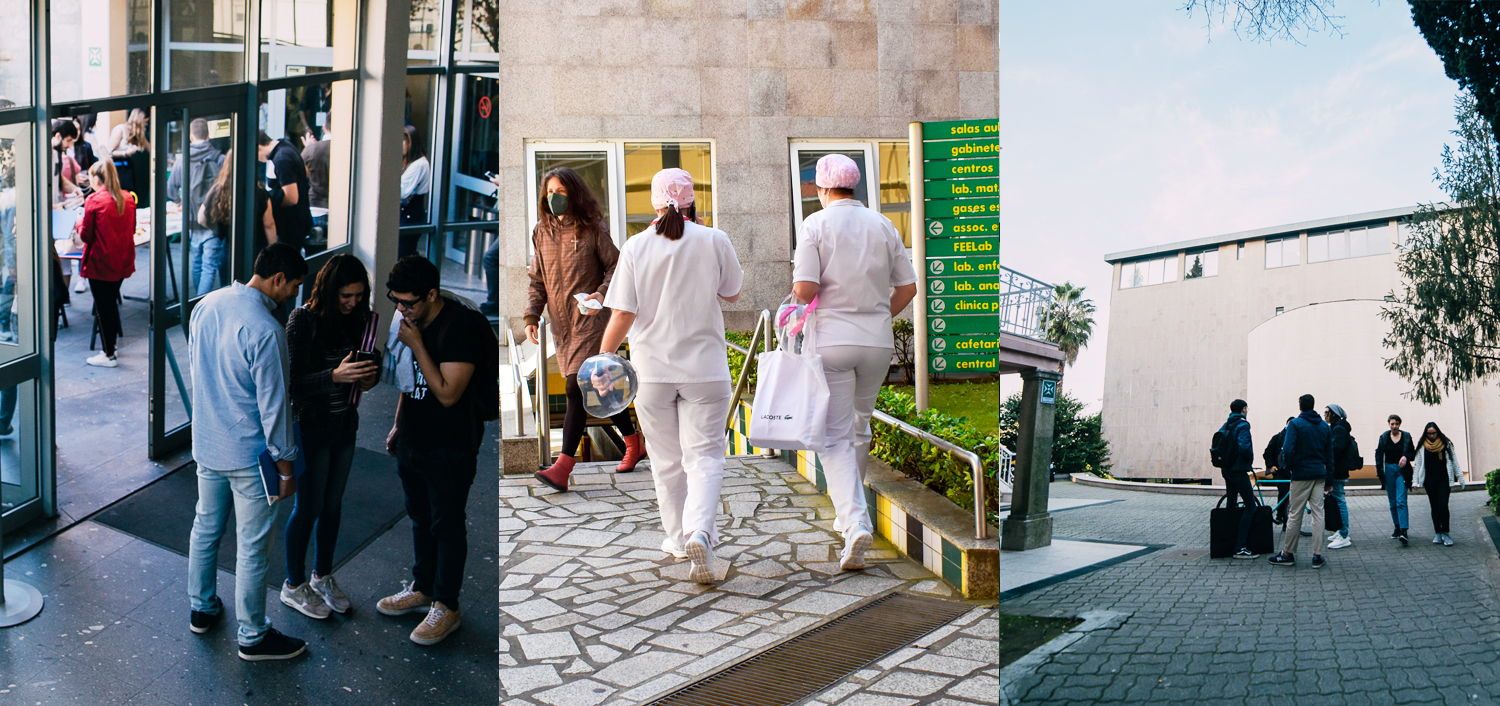
The years spent at university are exciting, but sometimes also a source of great stress. Many students face problems that are not easily solved or, for some reason, their usual way of solving them doesn't work well. They may have discovered, for example, that talking to friends or relatives about their concerns is impossible or unsatisfactory.
Some of the most common concerns students have include confusing and disturbing feelings, low self-confidence, relationships with others, self-actualization behaviors, academic problems, and decision-making dilemmas. The Psychology Office can address these concerns through counseling. Personalized counseling is an opportunity to talk about what's on your mind and what worries you with someone who, in an objective way, can help you learn ways to look at situations so that you become more capable of solving new problems on your own in the future.
Here are some reasons why students may need to visit the Psychology Office:
• The Psychology Office is a place where you can benefit from the help of an experienced professional;
• The psychologist offers objective help without making value judgments;
• The psychologist tries to make you feel comfortable talking about your problems – he/she understands you and helps you with your initial anxiety;
• Counseling at the Psychology Office addresses the normal concerns and problems of any student.
The initiation and continuation of counseling is voluntary, and all counseling activities are strictly confidential (no information is disclosed to anyone without the written consent of the person concerned).
The Psychology Office provides free counseling and support services to students and staff of UFP.
What is Burnout Syndrome?
Burnout Syndrome is directly related to the work environment and the detrimental impact that this environment has on a person's life.
This syndrome is not necessarily related to overwork, but rather to the relationship with the work environment and professional issues.
Although the Diagnostic and Statistical Manual of Mental Disorders (DSM-VI R) does not consider it a disease, the International Classification of Diseases (ICD-11) includes Burnout Syndrome or Professional Exhaustion in its latest revision, characterizing it as follows:
1. Feeling mentally exhausted or drained of energy.
2. Increased mental distance from work or feelings of negativity related to work; and
3. Reduced professional effectiveness
The symptoms are extremely varied, ranging from physical to psychological and emotional symptoms.
Emotional exhaustion, feelings of detachment from people, reduced personal accomplishment, and chronic stress in the workplace are some of the most common.
The Pessoa Community, namely faculty and students, has at its disposal, free of charge and in an environment of total confidentiality, a Psychology Service that provides psychotherapeutic support and psychological counseling.
ESS-FP
Delfim Maia Street, 334
4200-253 Porto • Portugal
T. (+351) 22 507 1317
(call to
national fixed network)
imartins@ufp.edu.pt
Tue. and Thu.: 5:00 PM–8:00 PM
Wed.: 8:00–11:00