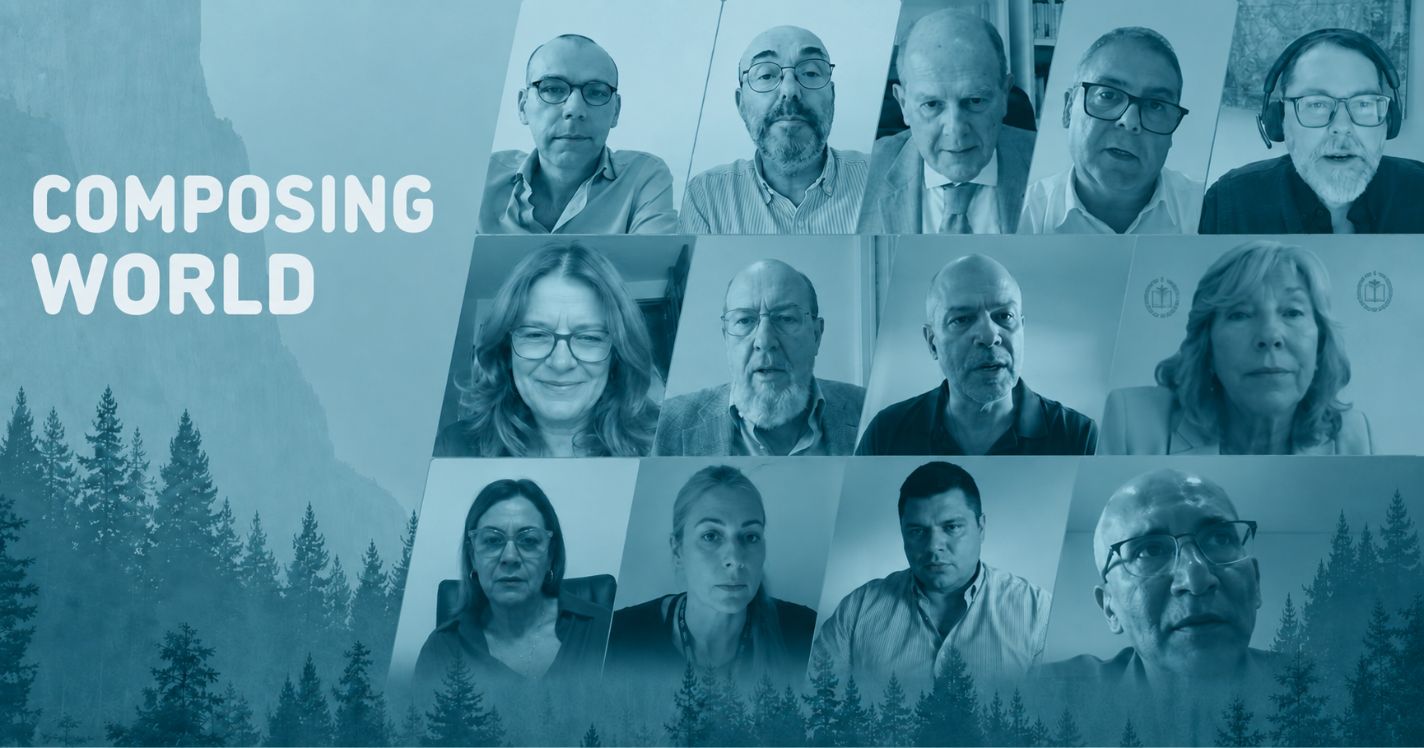
On 28 and 29 April, the Composing Worlds 2026: International Virtual Symposium on Mental Health, Humanities and Nature, promoted by the Fernando Pessoa University.
The Symposium is part of the work developed by the network Creating Worlds. Humanities, Wellbeing and Health, based at the Fernando Pessoa Foundation. This international meeting arises in a context marked by profound social, political, environmental, and epistemological transformations, which increasingly highlight the inadequacy of fragmented approaches to mental health.
The focus of Composing Worlds 2026 It is precisely in this plurality of dimensions that it is situated. We sought to understand how biological and evolutionary processes articulate with cultural contexts; how subjective experiences are shaped by social and symbolic structures; how the relationship with the natural world, now profoundly altered, is reflected in new forms of suffering, but also in possibilities for regeneration; how the body and mind are interconnected in the production of mental states; and how new forms of violence become civic issues.
On this horizon, the humanities play an essential role, not just as a field of interpretation, but also as a space for creating meaning, for ethical and aesthetic imagination, and for symbolic elaboration.
The symposium brought together researchers and professionals from different fields and geographies, who reflected on new conceptual and practical frameworks for mental health in a world undergoing profound transformation.
On the 28th, the inaugural conference emphasised the importance of the humanities and language for social and individual well-being, focusing on the current political situation. Subsequent panels addressed themes such as the importance of literature and cultural projects for personal and collective well-being; the loss of connection with natural temporality and the importance of socially recovering diverse biophysiological rhythms; intersectionality in gender issues, both for women and men, in Portugal and Brazil; and, finally, how crime should be understood from a developmental perspective, as well as the institutions that currently frame domestic violence in Portugal.
The 29th began with a panel dedicated to Artificial Intelligence, psychotherapy and the construction of the self through digital devices, also addressing topics related to child development, early intervention and children's rights, as well as the body-mind relationship in interoceptive, psychopathological and chronic illness processes.
The symposium concluded with a panel on the future of mental health research, which reinforced the importance of human presence in face of digital resources, as well as the keen clinical eye for detail that only an in-person encounter allows.
The keynote speech by the President of the Fernando Pessoa Foundation, Professor Salvato Trigo, concluded the proceedings with a reflection on the power of language and culture, and on the role of the network Composing Worlds from the Fernando Pessoa University in its promotion.
O Composing Worlds 2026 contributed to consolidating Fernando Pessoa’s role as a promoter of critical thinking, interdisciplinary research, and international cooperation in the areas of mental health, humanities, and well-being.