The open class “Prisons that Learn: management of penitentiary knowledge in Brazil and the challenges of contemporary criminal policy” will be based on the thesis that the penitentiary system should be understood not only as a space for the execution of sentences, but also as a complex organization that produces data, information, experiences, and knowledge.
In this sense, the perspective of “Learning Prisons” is proposed, understood as organizations capable of identifying, producing, systematizing, storing, sharing, and applying the knowledge produced by their different actors, transforming it into an institutional asset to support decision-making processes, innovation, and the formulation of public policies.
The lecture aims to discuss the main tensions and contradictions of contemporary Brazilian criminal policy; present the penitentiary system as an organization that produces knowledge; discuss the management of knowledge as an instrument of institutional learning and innovation; reflect on the role of education in penal services in the construction of penitentiary organizations capable of learning; and relate this perspective to penal alternatives and the challenges of building responses to crime that reduce the centrality of imprisonment.
The class will be taught by the teachers Mazukyevicz Nascimento and Tâmisa Rúbia (Paraíba Penitentiary Management School).
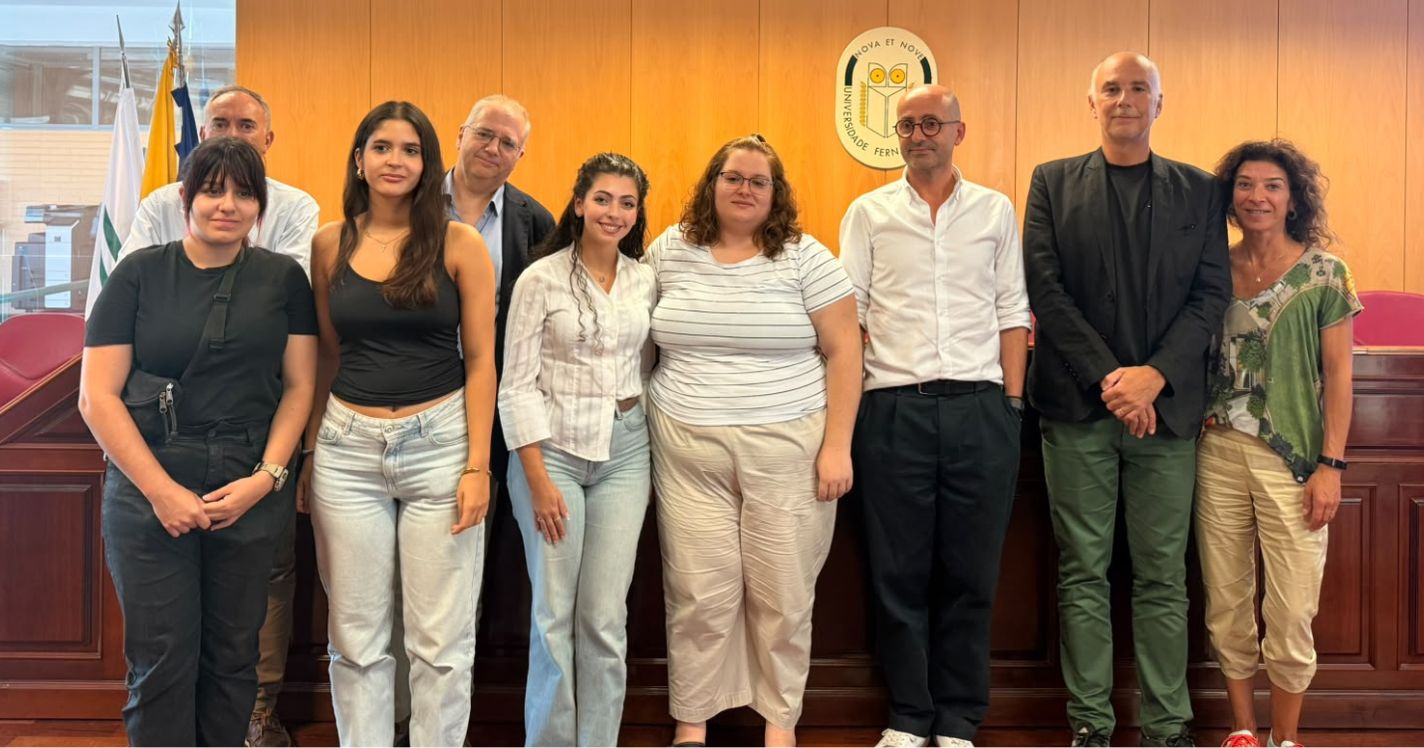
In this context, the dialogue between Brazil and Portugal constitutes a relevant dimension of the reflection, especially due to the possibility of bringing different experiences, institutional models, and practices in education and management in the penal field closer together. The rapprochement between the Penitentiary Management School of Paraíba and the Faculty of Human and Social Sciences of Fernando Pessoa University is understood in this sense as a space for academic and institutional exchange, capable of fostering the circulation of knowledge, experiences, and practices among professionals, researchers, and students from both countries. Rather than establishing normative comparisons between distinct systems, the Brazil-Portugal dialogue allows exploring how different contexts can produce reciprocal learning and contribute to the construction of new perspectives on penitentiary management, professional training, and policies for preventing and responding to crime.
The open class will take place in Room A1 in the Headquarters Building from 15:30 to 17:00 and is intended for students of Criminology and Psychology of Justice.
Free entry.