FERNANDO PESSOA
UFP • UFP
Presentation
Result of the institutional accreditation process by the Agency for Assessment and Accreditation of Higher Education (A3ES) • Decision: Accredited • Number of years of accreditation: 1 • Validity period of accreditation: 05/11/2025 (accreditation renewal process underway) • A3ES Resolution • Self-assessment report
The Fernando Pessoa University (UFP), established by Fernando Pessoa Foundation for Education and Culture (FFP) and recognized as being of public interest by Decree-Law No. 107/96, of July 31, is the result of an innovative higher education project, initiated in the 1980s, through the Higher Institute of Information and Business Sciences, and the Erasmus Institute of Higher Education, which served as its structuring basis and whose seniority of degrees and diplomas it inherited, under the terms of Article 7 of that decree.
Vision
To be recognized as a University that innovates in knowledge and teaching methods, contributing to the enrichment of the country, helping to train entrepreneurial citizens who are scientifically well-prepared, culturally evolved, socially engaged, and ethically committed.
Mission
UFP's primary mission is to provide education based on honest study and continuous scientific updating, supported by an innovative pedagogical methodology that transforms knowledge into skills, fostering critical thinking and autonomous thought in students open to interdisciplinarity and a solid ethical, cultural, and civic education.
The university fulfills its mission by respecting ethnic, cultural, political, and religious diversity, as well as gender equality.
The observance of the Universal Declaration of Human Rights; the abhorrence of war and ideological and religious fundamentalisms; tolerance in social relations; and creative and entrepreneurial boldness are the guiding values of the university in fulfilling its mission and achieving its objectives.
With the motto Nova et Nove (Innovating in knowledge and teaching methods), the Fernando Pessoa University (UFP) aims to provide teaching, research, community outreach, and services in the fields of training offered by its organic units of face-to-face teaching:
• Faculty of Science and Technology
• Faculty of Human and Social Sciences
• Faculty of Health Sciences
• School of Medicine and Biomedical Sciences
According to its statutes (Notice No. 12715/2020, of August 31), UFP also has an organic unit to support face-to-face teaching and distance learning, the UFP-UV – distance learning center, operating at the Ponte de Lima Unit of the Fernando Pessoa University. Operating on the Canvas platform, UFP-UV supports and expands the territorial scope and audiences of the face-to-face courses of the organic units and is responsible for organizing study cycles whose distance learning operation is accredited.
The faculty, with permanent ties to the university, consists of approximately two hundred professors, of whom 80% hold a doctoral degree. Research, funded by the FFP itself or by the Foundation for Science and Technology or specific European Union programs, takes place in multidisciplinary centers.
Operating autonomously from the 2020-21 academic year, the Fernando Pessoa Higher School of Health (ESS-FP) had its public interest recognized by Decree-Law No. 45/2020, of July 23. Thus, the Fernando Pessoa Foundation becomes the founding entity of two institutions:
• Fernando Pessoa University
• Fernando Pessoa Higher School of Health
Rectory
Rector from Fernando Pessoa University
Professor Doctor Eugénio Campos Ferreira
Patron
Fernando Pessoa, our patron, was the greatest poet of Portuguese-language literary modernism and a thought-provoking thinker about a more cultured and daring Portugal in the construction of its future.
[Chronology resulting from the adaptation and summary of the chronology of the poet's life and work presented by João Gaspar Simões (in Fernando Pessoa – a brief history of his life and work, Lisbon, Difel, 1983), by José Augusto Seabra (in Fernando Pessoa or the Poetodrama, National Mint Press) and by Maria José de Lencastre (in Fernando Pessoa: A Photobiography, Lisbon, Quetzal Editores, 1996).]
1888: Poet Fernando António Nogueira Pessoa was born on June 13th, on the 4th floor left of number 4 Largo de São Carlos in Lisbon, son of Maria Magdalena Pinheiro Nogueira and Joaquim de Seabra Pessoa.
1889: Date of birth of Alberto Caeiro
1890: Date of birth of Álvaro de Campos
1893: In January, Jorge, the poet's brother, is born. On July 13th, Joaquim de Seabra Pessoa, Fernando Pessoa's father, dies at the age of 43.
1894: In January, his brother Jorge dies. The poet's mother, Maria Magdalena Pinheiro Nogueira Pessoa, meets Commander João Miguel Rosa. Creation of the first heteronym: Chevalier de Pas. João Miguel Rosa is appointed Interim Consul in Durban, South Africa.
1895: In July, Fernando Pessoa writes his first poem: “To my dear mother”. On December 30th, Dona Maria Magdalena marries, by proxy, Commander João Miguel Rosa.
1896: Departure for South Africa of Dona Maria Madalena and her son, at the beginning of January. Henriqueta Madalena, the poet's sister, is born.
1897: Fernando Pessoa begins primary school and in three years achieves the equivalent of 5 years of schooling.
1898: In October, the second daughter of the couple Miguel Rosa, Madalena Henriqueta, is born.
1899: In April, Fernando Pessoa enrolled at Durban High School, Form II-B. In June he moved to Form II-A. In December he won the Form Prize in Form II-A. That year he created the heteronym Alexandre Search, under whose name he wrote letters to himself.
1900: In January, the couple's third child, Luís Miguel, is born. In June, Fernando Pessoa progresses to Form III and is awarded a prize in French.
1901: In June, Fernando Pessoa takes the Cape School High Examination. Madalena Henriqueta dies. In August, Fernando Pessoa visits Portugal with his family.
1902: Birth of the fourth child of the couple Miguel Rosa, João Rosa. The family returns to Durban in September. Fernando Pessoa enrolls in the Commercial School in Durban.
1903: Takes the entrance exam for the University of the Cape of Good Hope. Reads Shakespeare, Milton, Byron, Poe, Keats, Shelley, Tennyson. Writes poems in English under the pseudonym Alexandre Search. The pseudonyms Charles Robert Anon and HMF Lecher emerge.
1904: Returns to High School and enters Form IV. Wins the Queen Victoria Prize for her English essay, an entrance exam for the University of Cape Town. Birth of another daughter, Maria Clara. In December, takes the Intermediate Examination in Arts at the University of Cape Town. Completes her studies in South Africa.
1905: He leaves alone for Lisbon and goes to live with his grandmother Dionísia and his two aunts.
1906: Enrolls in the Higher Course of Letters in Lisbon. The family returns to Lisbon for vacation. During this stay, his sister Maria Clara dies.
1907: He abandons his studies without completing the first year. With money inherited from his grandmother Dionísia, he sets up a printing press which he names Empresa Ibis – Tipografia Editora – Oficinas a Vapor (Ibis Company – Printing and Publishing – Steam Workshops), which barely gets off the ground.
1908: He enters the business world as a "foreign correspondent," a profession he will practice throughout his life.
1910: The magazine A Águia, 1st phase, is founded in Porto.
1911: Pessoa is commissioned to translate into Portuguese an Anthology of Universal Authors, directed by an American publisher.
1912: In January, the Portuguese Renaissance was founded in Porto. The newspaper *A Águia*, directed by Teixeira de Pascoaes, became the organ of this movement. In April, he published his first article in *A Águia*, the organ of the Portuguese Renaissance, entitled "The New Portuguese Poetry Sociologically Considered," where he prophesied the emergence of a "Supra-Camões." He began his correspondence with Mário de Sá-Carneiro, who, from Paris, informed him of new movements such as Cubism and Futurism. The poet Ricardo Reis was born in his mind.
1913: He writes the poem "Pauis," which would give rise to Paulism. He comes into contact with Almada Negreiros and Mário de Sá-Carneiro. He writes "O marinheiro" (The Sailor), a static drama. He collaborates with the weekly newspaper Teatro and continues his collaboration with A Águia. He writes "Epithalamium" and "Hora Absurda" (Absurd Hour).“
1914: Alberto Caeiro emerges with the text "The Keeper of Flocks". He writes "Triumphal Ode" and "Opiary", attributed to Álvaro de Campos. He writes "Oblique Rain", a key text of Intersectionism. He moves to Rua Pascoal de Melo, to his aunt Anica's house. In June, he writes the first poem of Ricardo Reis. In a letter to Sá-Carneiro, dated July, he declares that he has reached the full period of his literary maturity. Break with the poets of A Águia.
1915: Lives for a time at the Leitaria Alentejana (Alentejo Dairy), due to Aunt Anica's departure for Switzerland. The first issue of Orpheu is published in April. The second issue of Orpheu is published in July. Mário de Sá-Carneiro leaves for Paris. Period of intense literary production by Fernando Pessoa and his heteronyms. Possible date of Alberto Caeiro's death.
1916: In April, Mário de Sá-Carneiro commits suicide in Paris at the Hotel de Nice. Almada Negreiros publishes the "Anti-Dantas Manifesto". In September, the release of the third issue of Orpheu is announced, but it never appears. He collaborates on magazines such as Centauro and Exílio.
1917: The first and only issue of Portugal Futurista, a magazine published by Almada Negreiros and Santa-Rita Pintor, is released, featuring Álvaro de Campos's "Ultimatum".“
1918: Santa-Rita Pintor and Amadeo de Sousa Cardoso die. Pessoa publishes his English poems "Antinous" and "35 Sonnets".“
1919: Despite having presumed him dead, he writes a series of poems (“Uncollected Poems”) in the name of Alberto Caeiro on this date. Ricardo Reis goes into exile in Brazil. Commander João Miguel Rosa, the poet's stepfather, dies in Pretoria.
1920: He writes his first love letter and begins a courtship with Ophélia Queirós. He moves to Rua Coelho da Rocha, where he will live with his mother and siblings.
1921: He publishes his "English Poems" (I, II and III) through a publishing house he founded himself (Olisipo).
1922: Began contributing regularly to the magazine Contemporânea.
1924: The beginning of Surrealism in France. The first issue of the magazine Athena, which Fernando Pessoa edited with the painter Ruy Vaz, was published in October.
1925: Death of the poet's mother. Athena ceases publication.
1926: Pessoa, along with his brother-in-law, Colonel Caetano Dias, directs the Revista de Comércio de Contabilidade (Accounting and Commerce Review), whose first issue is published in January of that year, and in which he publishes articles on socio-economic topics.
1927: The first issue of the "art and criticism journal" – Presença – is published in Coimbra.
1929: He resumes his courtship with Ophélia Queirós. He undertakes, with António Botto, the publication of an Anthology of Modern Portuguese Poets.
1930: He begins corresponding with the English magician Aleister Crowley and receives a visit from him in September. The magician mysteriously disappears that month at Boca do Inferno, in Cascais, a disappearance in which Fernando Pessoa participates. A fruitful period of heteronymous and orthonymous poetic creation. He continues his collaboration with Presença.
1931: Publishes in the journal Presença with the translation of Aleister Crowley's "Hymn to Pan".
1932: He unsuccessfully applies for a position as curator of a bibliographic museum in Cascais. He collaborates with the magazine Presença, where he publishes Iniciação as well as fragments of The Book of Disquiet.
1933: Goes through a serious neurasthenic crisis.
1934: In December, Mensagem (Message) is published. That same month, for the publication of the work, he is awarded the second category of the Antero de Quental prize by the National Propaganda Secretariat.
1935: He was admitted to the Hospital de S. Luís in Lisbon on November 28th, where he died on November 30th.
Honoris Causa
Fernando Pessoa University awarded Doctorates Honoris Causa, several personalities of recognized merit:
In 2018
Jeffrey K. Zeig
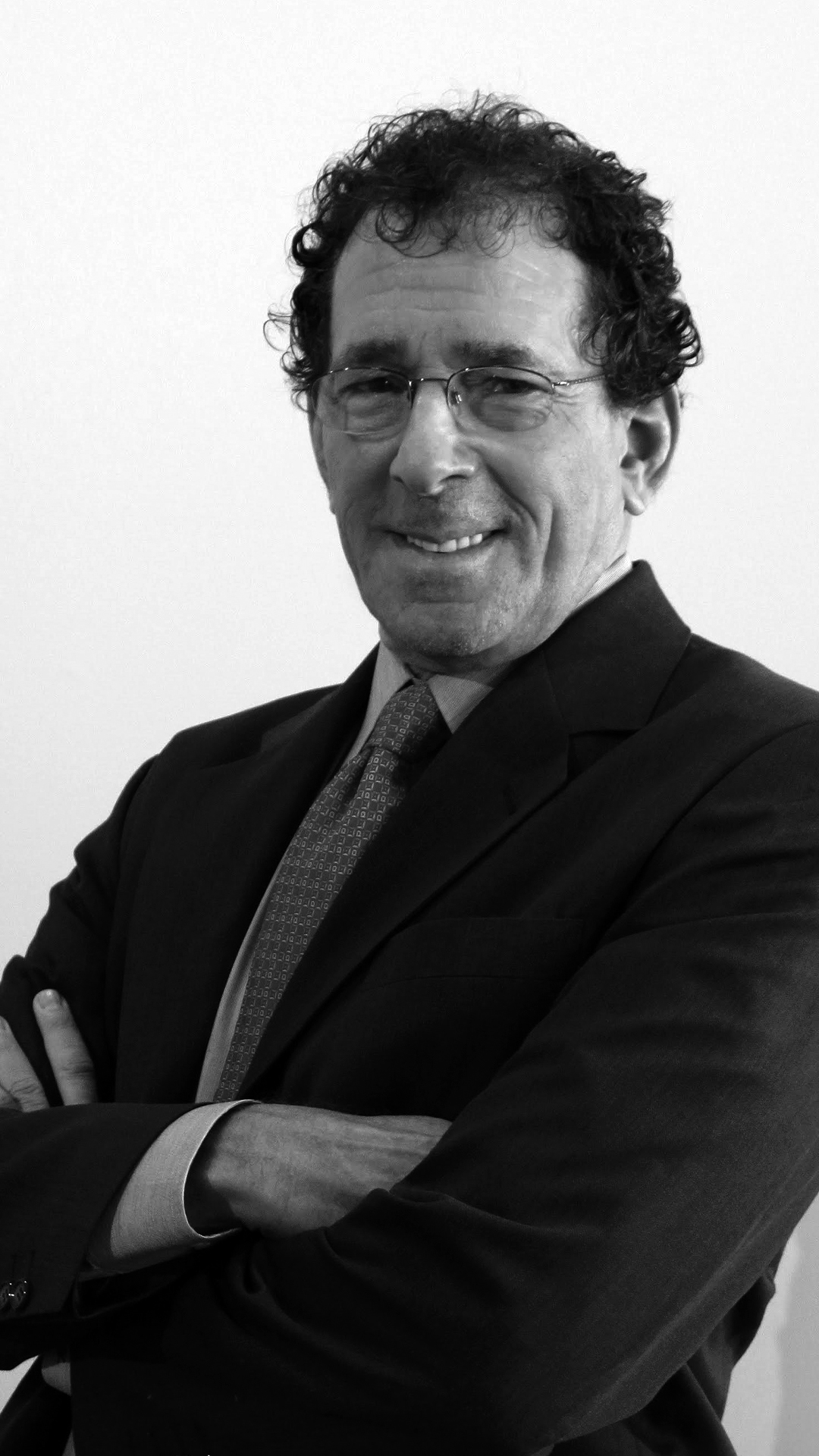
Fernando Pessoa University awarded the degree of Doctor Honoris Causa in Social and Behavioral Sciences to Jeffrey K. Zeig. The solemn ceremony took place on November 21, 2018, at 6:00 PM, in the UFP Auditorium.
Curriculum
• PhD in Clinical Psychology from Georgia State University, USA.
• Founder and Director of the Milton H. Erickson Foundation, Phoenix, Arizona, USA.
• Conference architect The Evolution of Psychotherapy, considered the most important in the history of psychotherapy. Organizer of Brief Therapy Conference, from the Couples Conference and ten international congresses on Ericksonian approaches to hypnosis and psychotherapy.
• He serves on the editorial board of several scientific journals; he is a Fellow of the American Psychological Association (Division 29, Psychotherapy) and the American Society of Clinical Hypnosis. He is a distinguished expert of the National Academy of Practice in Psychology and the National Academies of Practice.
• Supervisor of the American Association for Marriage and Family Therapy. He was a clinical member of the International Transactional Analysis Association (1974-1985); and an adjunct professor of clinical psychology at Arizona State University (1988-1992).
• Psychologist and couples and family therapist, he has a private practice and conducts international workshops (in 40 countries). He has been a guest speaker at major universities and teaching hospitals, including The Mayo Clinic, Menningers, and MD Anderson.
• President of the behavioral science publishing house Zeig, Tucker & Theisen and founder of the Erickson Foundation Press.
• He edited, co-edited, wrote, and co-authored more than 20 books on psychotherapy, translated into 14 languages.
Proponent: Professor Dr. Rute Meneses
Godfather: Professor Dr. Camillo Loriedo
Csaba Farsang
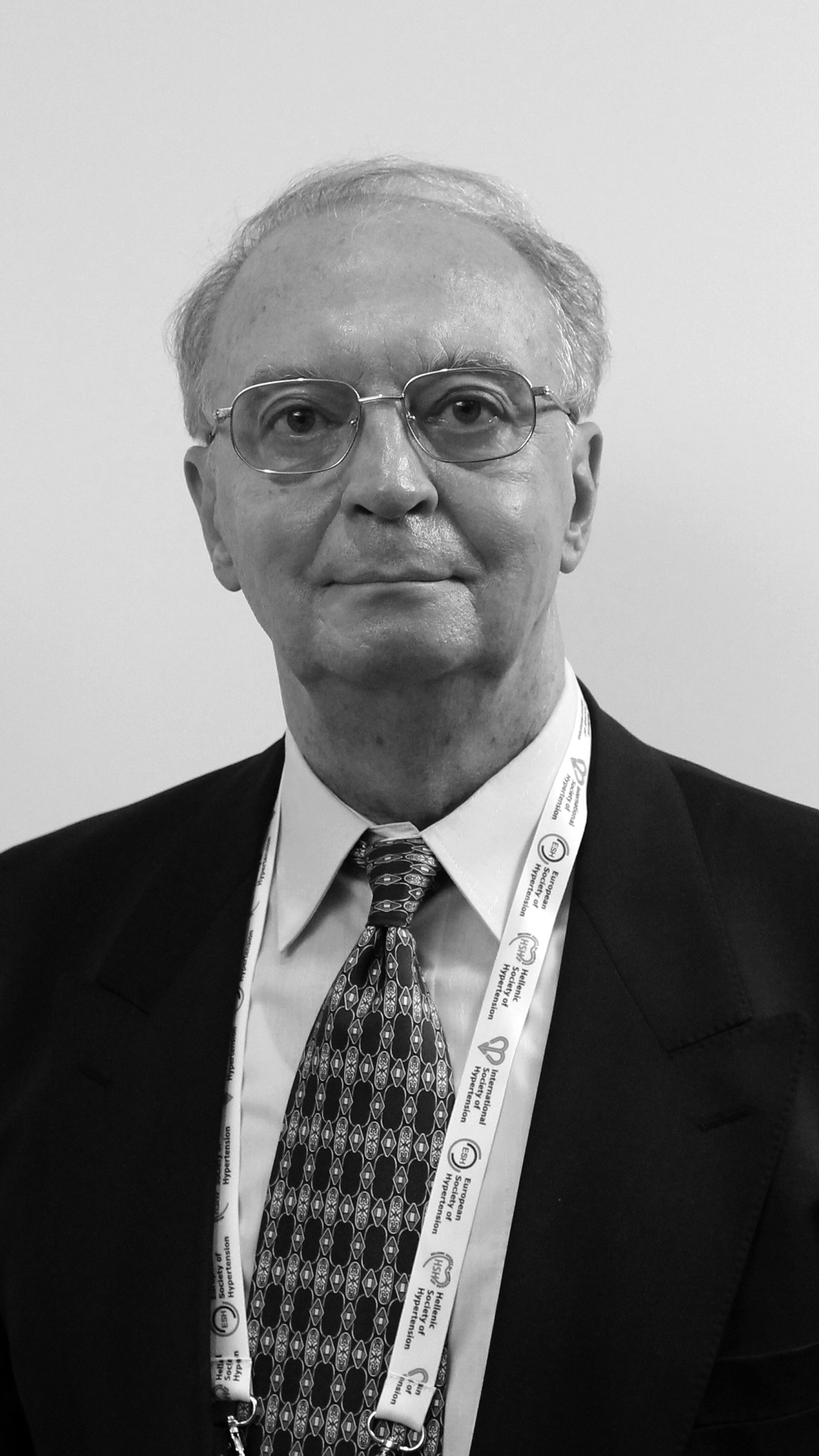
Fernando Pessoa University awarded Csaba Farsang an honorary doctorate in Health Sciences. The solemn ceremony took place on October 18, 2018, at 6:00 PM in the UFP Auditorium.
Curriculum
• Since 2013: Head of the Hypertension Outpatients Department at St. Imre Teaching Hospital, Budapest, Hungary
• 2007: Head of the Cardiometabolic Centre of St. Imre Teaching Hospital, Budapest, Hungary
• 2003: Head of the 1st Department of Medicine, Semmelweis University, Budapest, Hungary
• 1993: Member of the Ethics Committee for Clinical Pharmacology of Medical Research Council, Hungary
• 1990: Medical Director of St. Imre Teaching Hospital and Head of the 1st Department of Medicine
• 1989: Lecturer in the 2nd Department of Medicine, Semmelweis University, Budapest, Hungary.
Specializations
• Internal medicine, Nephrology, Clinical Pharmacology
• Licenses: Hypertension, Obesity, Lipidology.
Investigative activities
• Doctor of Science from the Hungarian Academy of Sciences: Adrenergic-opioid interaction in hypertension (1984)
• PhD in Reactive Myocardial Hyperemia (1977)
• Over 400 scientific articles, 72 books/chapters, and over 4000 citations.
• Contributions to the Hungarian Hypertension Guidelines: 1 – 11, Hypertension Guidelines, European Society of Hypertension/European Society of Cardiology: in 2003, 2007, 2013, 2018.
• Member of medical societies
• Hungarian societies: Society of Hypertension (founder and now honorary lifetime president), Society of Experimental and Clinical Pharmacology (former president), Society of Internal Medicine (board member)
• European and International Societies: European Society of Hypertension (former member of the scientific council, member of educational activities), International Society of Hypertension, and European Society of Cardiology
• Honorary member: Portuguese Society of Hypertension, Polish Society of Hypertension, Romanian Society of Hypertension, European Society of Hypertension and Association of Cardiologists of the Republic of Kazakhstan.
International activities
• 1978-1979: Research at McGill University, Montreal, Canada
• 1990: Participation in 38 clinical trials, lectures at various congresses.
• Teaching activities: in Hungary: postgraduate courses in internal medicine and pharmacology.
• International teaching activities: European Society of Hypertension, Polish Society of Hypertension, Romanian Society of Hypertension, Association of Cardiologists of the Republic of Kazakhstan, Portuguese Society of Hypertension; lectures on hypertension at Fernando Pessoa University.
Awards
• Sub Auspitiis Rei Publicae Popularis (Golden Ring of the Hungarian People's Republic)
• Research Prize from the Hungarian Academy of Sciences
• Semmelweis Prize awarded by the Ministry of Health of the People's Republic of Hungary
• Career Award from Sanofi
• Award from the Federation of Hungarian Medical Societies
• Török Eszter Award by the Hungarian Society of Hypertension
• Gábor György Prize from the Hungarian Society of Cardiology
• Honorary Doctorate from Almaty University, Kazakhstan
Proponent: Professor Luis Martins, PhD
Godfather: Professor Dr. Luis Martins
Eduardo Franco
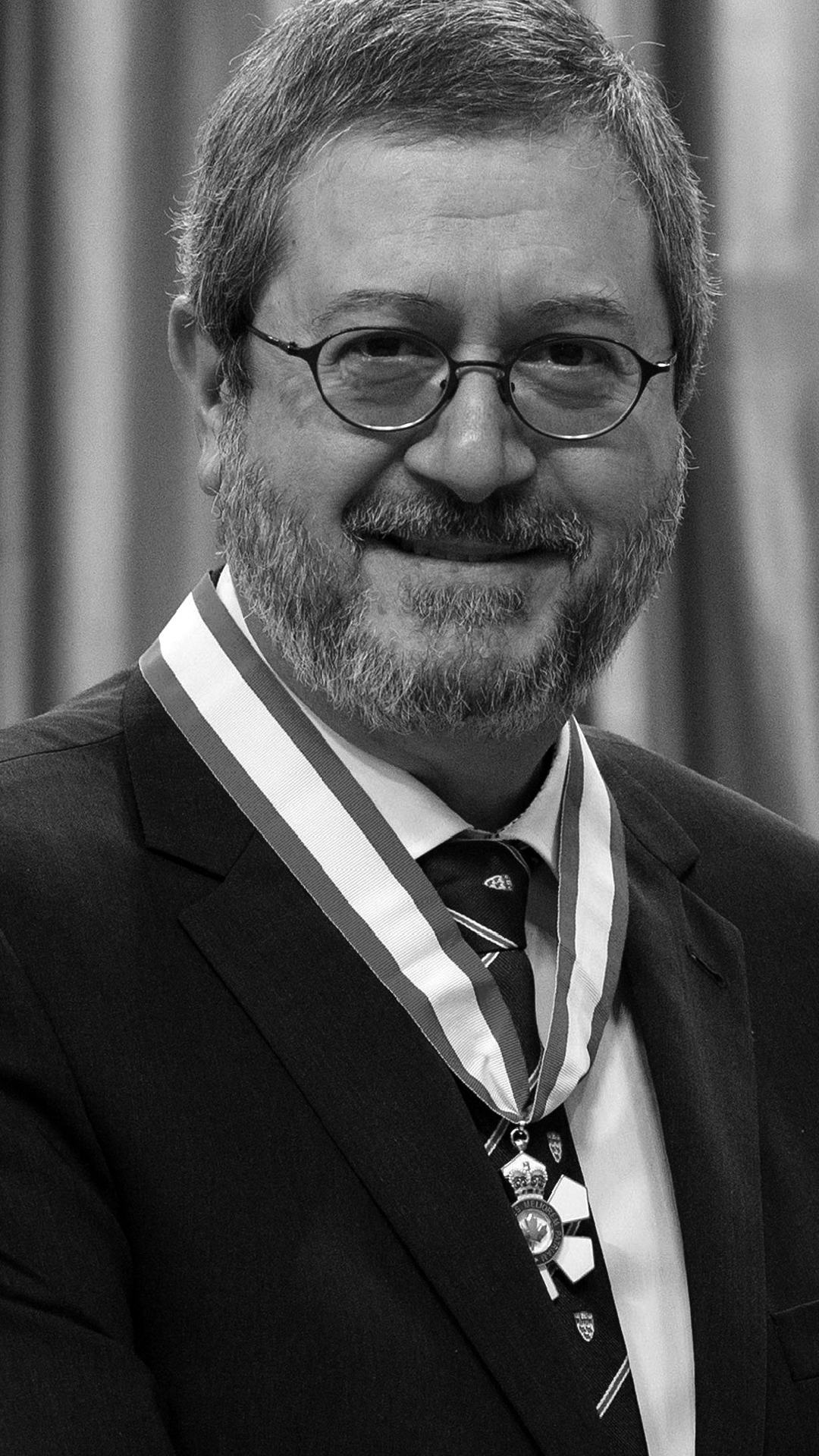
Fernando Pessoa University awarded Eduardo Franco an honorary doctorate in Health Sciences. The solemn ceremony took place on March 16, 2018, at 5:00 PM in the UFP Auditorium.
Curriculum
• Since 1996: Full Professor and Chair Professor
• Since 2011: Head of the Oncology Department at McGill University, Montreal, Canada.
• Since 1995: Director of the Division of Cancer Epidemiology at McGill University, Montreal, Canada.
Research focus since 1985
• Epidemiology and prevention of cervical, upper aerodigestive tract, prostate, and endometrial cancer; etiology and prognosis of Wilms' tumor; epidemiological methods in evaluating the effectiveness of cancer screening and the impact of classification error in epidemiology.
Distinctions
• Officer, Order of Canada (2016)
• Foreign Member, Brazilian Academy of Sciences (2013)
• Fellow, Canadian Academy of Health Sciences (2012)
• Fellow, Royal Society of Canada (2011)
• Honorary President, EUROGIN Congress, Monaco (2010)
• Women in Government's Leadership Award, US Congress and State Legislatures (2008)
• Ambassador Emeritus, Montreal Convention Centre (2007)
• James McGill Professorship (2002, 2009, 2016)
• Distinguished Scientist, Canadian Institutes of Health Research (2000)
Awards
• Distinguished Service to Cancer Research Award, Canadian Cancer Research Alliance (2017)
• Dr. Chew Wei Memorial Prize in Cancer Research, University of British Columbia (2017)
• Geoffrey Howe Outstanding Contribution Award, Canadian Society for Epidemiology and Biostatistics (2017)
• Lifetime Achievement Award, International Papillomavirus Society (2015)
• McLaughlin-Gallie Award, Royal College of Physicians of Canada (2011)
• Lifetime Achievement Award, American Society for Colposcopy and Cervical Pathology (2010)
• Distinguished Services Award, EUROGIN (2006)
• Warwick Prize for Cancer Control, Canadian Cancer Society (2004)
• McGill University's Educational Excellence (2000)
Other activities
• Editor-in-Chief: Preventive Medicine (2013-); Preventive Medicine Reports (2014-)
• Member of the editorial board of the following publications: American Journal of Epidemiology (1993-1998); Cancer Detection and Prevention (2001-2008); Cancer Epidemiology, Biomarkers and Prevention (since 1995); eLife (since 2012); Epidemiology (1995-2009); Medical and Pediatric Oncology (2000-2004); International Journal of Cancer (since 2009); Public Library of Science – Medicine (2004-2017).
• Published over 500 articles and book chapters.
• Supervised over 130 undergraduate, graduate, and postdoctoral students.
Proponent: Professor Rui Madeiros
Godfather: Professor Doctor Manuel Bicho
In 2014
Federico Mayor Zaragoza
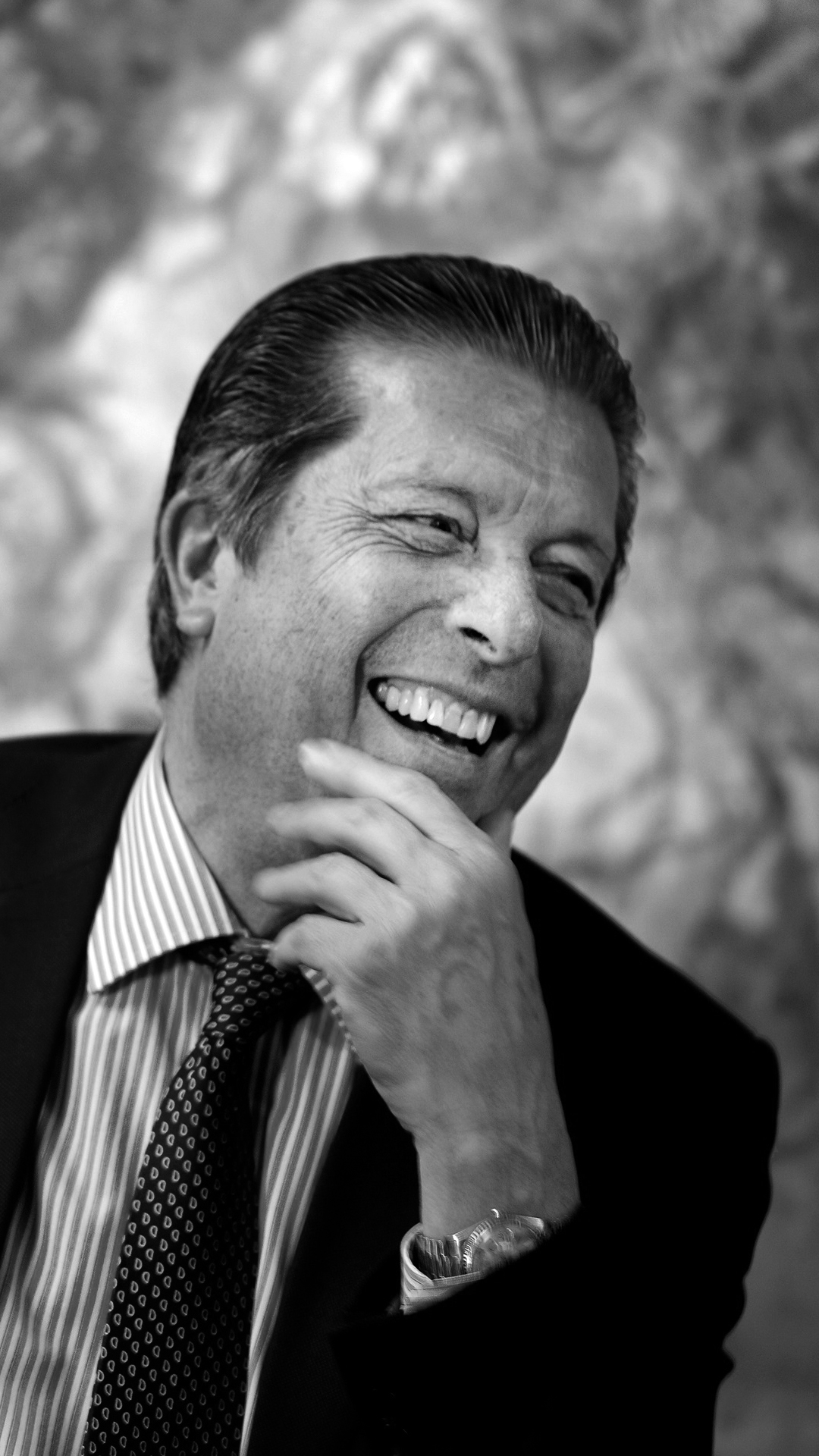
Fernando Pessoa University awarded Federico Mayor Zaragoza an honorary doctorate in Social Sciences (Political Science and International Relations). The solemn ceremony took place on May 3, 2014, at 10:00 AM in the UFP Auditorium.
Curriculum
• Twenty-five years of uninterrupted dedication to the service of World Peace have maintained Dr. Federico Mayor in that splendid lucidity that is the youthfulness of the spirit, which his long and rich life experience makes even more admirable, whether when he surprises us with his quick reflexes and sense of irony, or by his ability to enlighten us with the work of Pablo Picasso or Konrad Adenauer, the scientific challenges of Rita Levi-Montalcini or Bertrand Russell, or even the poetic paths of Léopold Sédar Senghor, capable of carrying "all of Africa in his heart"!
• When, in 1987, at the age of 53, he was elected the VIII Director-General of UNESCO, he was already a leading figure in the scientific and professional field of Biology, involved as he was with the HUGO program and the sequencing of the human genome. No less remarkable was his involvement and decisive contribution to the political and democratic transition of post-Franco Spain, as Rector of the University of Granada and as Minister of Science and Education, committed to shaping the new regime on solid European foundations. He was, therefore, an essential collaborator, during that very delicate time, both for the Prime Minister, Adolfo Suárez, and for King Juan Carlos and Queen Sofia.
• Born on the shores of the Mediterranean, he learned from his father to be a man of universal vision – “a man for all seasons” – and from his mother, to be a tireless son of the nearby land – “they would rest when they died”. Married to Mª Angeles Menézdez González, it is this illustrious woman and the female saga of descendants with which they were compensated – daughter, granddaughter and great-granddaughter – that forms the most intimate core of his center of gravity.
• This renowned biologist, thinker, poet, and citizen of the world stood steadfastly against the pressures that affected UNESCO because of the so-called "MacBride Report," and was the great continuator of Julian Huxley's project to rewrite, together (including his adversaries), a new history of the world, with achievements as significant for humanity as the salvation of the Abu Simbel temples or the reconstruction of the Library of Alexandria. The global contract "Un Monde Nouveau" (with Jérôme Bindé), at the end of his third term, laid the groundwork for defining the so-called "Millennium Development Goals," at the same time that the UN General Assembly approved the Declaration and Plan of Action on a Culture of Peace, which today marks the true 'kybernos' or path for the future of the Mediterranean and the world as a whole.
• Due to his incorruptible independence, firm judgment, and international mediation skills, Dr. Federico Mayor remains a person of special importance to the United Nations for arduous missions, such as dialogue between civilizations or the abolition of the death penalty, and was – along with José Luis San Pedro and Stéphanen Hessel – one of the three most widely read authors in the world in the global movement for democratic renewal and indignation against “bad financial globality”.
Proponent: Prof. Doctor Salvato Trigo
Godfather: Professor Doctor Luís Martins
Guglielmo by Giovanni-Centelles
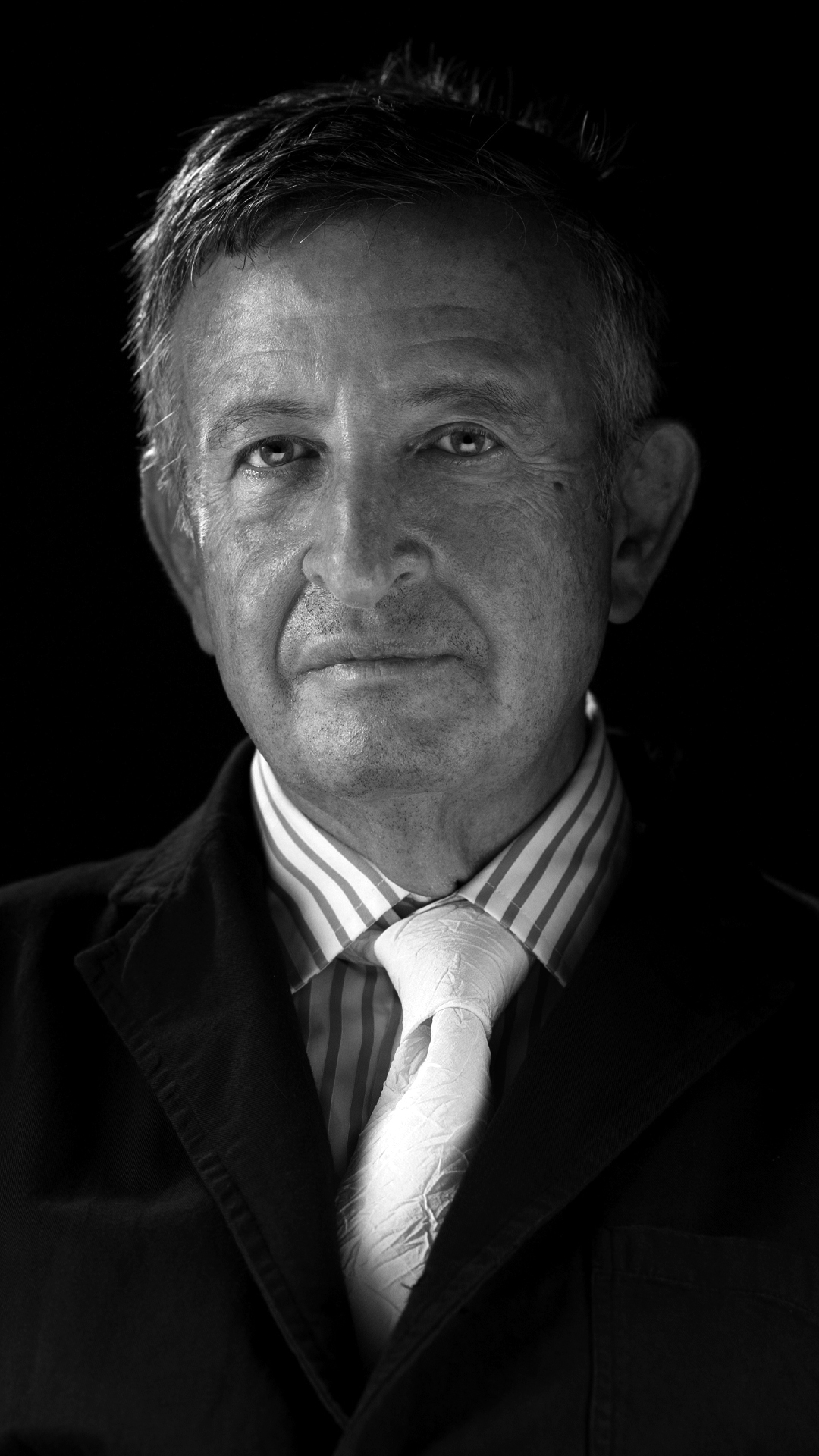
Fernando Pessoa University awarded the degree of Doctor Honoris Causa in Information Sciences (Journalism) to Guglielmo de'Giovanni-Centelles. The solemn ceremony took place on May 3, 2014, at 10:00 AM, in the UFP Auditorium.
Curriculum
• A descendant of one of the most illustrious families of the ancient Kingdom of Valencia, who accompanied King Alfonso V, the Magnanimous, in the conquest of the Kingdom of Naples, the current XII Duke of Precácore was born in Rome on November 3, 1950.
• Married to engineer Carla Graziosi, he has a long career as a professional journalist in civilian life and, within the diplomatic sphere of the Vatican State, a no less impressive record of service, as evidenced by his status as a prominent member of the Pontifical Academy of Fine Arts and Letters. Dr. de'Giovanni-Centelles is also an Advisor to the Board of Directors of the Fondazione Roma-Mediterraneo; a member of the Order of Merit of the Italian Republic; a Knight of the Order of Malta and of the Order of the Holy Sepulchre; and a Commander of the Orders of St. Gregory the Great, and of St. Maurice and St. Lazarus.
• With a keen journalistic sensibility, recognized as a "professional journalist" (1975) in the newspaper Il Tempo (where he was Editor-in-Chief) or in periodicals such as Notiziario and magazines such as NFR or Le Dimore Storiche (where he is Director), he dedicates himself to the passionate study of historical themes, which makes him a reference for the historiography of the Mediterranean, from the year 2000 onwards, when his academic specialization as Professor of Mediterranean History at the Orsola Benincasa University began to spread to the universities of Naples, Calabria, Rome and Sicily and, subsequently, to the international circum-Mediterranean sphere.
• Prodigal in advice and a patient tutor for students, it is among doctoral students where his academic work is most evident, supervising monographs and attending congresses as significant as the following: San Giorgio e il Mediterráneo, Vatican City, 2004; Arte e cultura del Mediterraneo nel XX secolo, Rome, 2004; La Cronaca di Ramón Muntaner, Valencia, 2005; Mercurino, Carlo V e l'Europa, Gattinara, 2005; El Toisón de Oro: Fundació Jaume II el Just, Valencia, 2006; Diego Cavaniglia, la Rinascita di un Conte, Montella, 2008; All the roots of the national identity. Prosopografie storiche italiane, Rome, 2009; Mediterráneo port of Oriente, Rome, 2012.
• His affirmation of the unifying values of the Mediterranean, which, after the Neolithic revolution of wine, olive oil, bread and salt, produced navigation, trade, monotheism and the polis (enabling a horizon of justice, dialogue, solidarity and peace), projects him as a renewed disciple of Ferdinand Braudel, whose Annales (today the Interuniversity Chair of Mediterranean History) opened new paths for modern and contemporary scientific historiography.
Proponent: Prof. Doctor Salvato Trigo
Godfather: Professor Doctor João Casqueira Cardoso
José Manuel Gironés Guillem
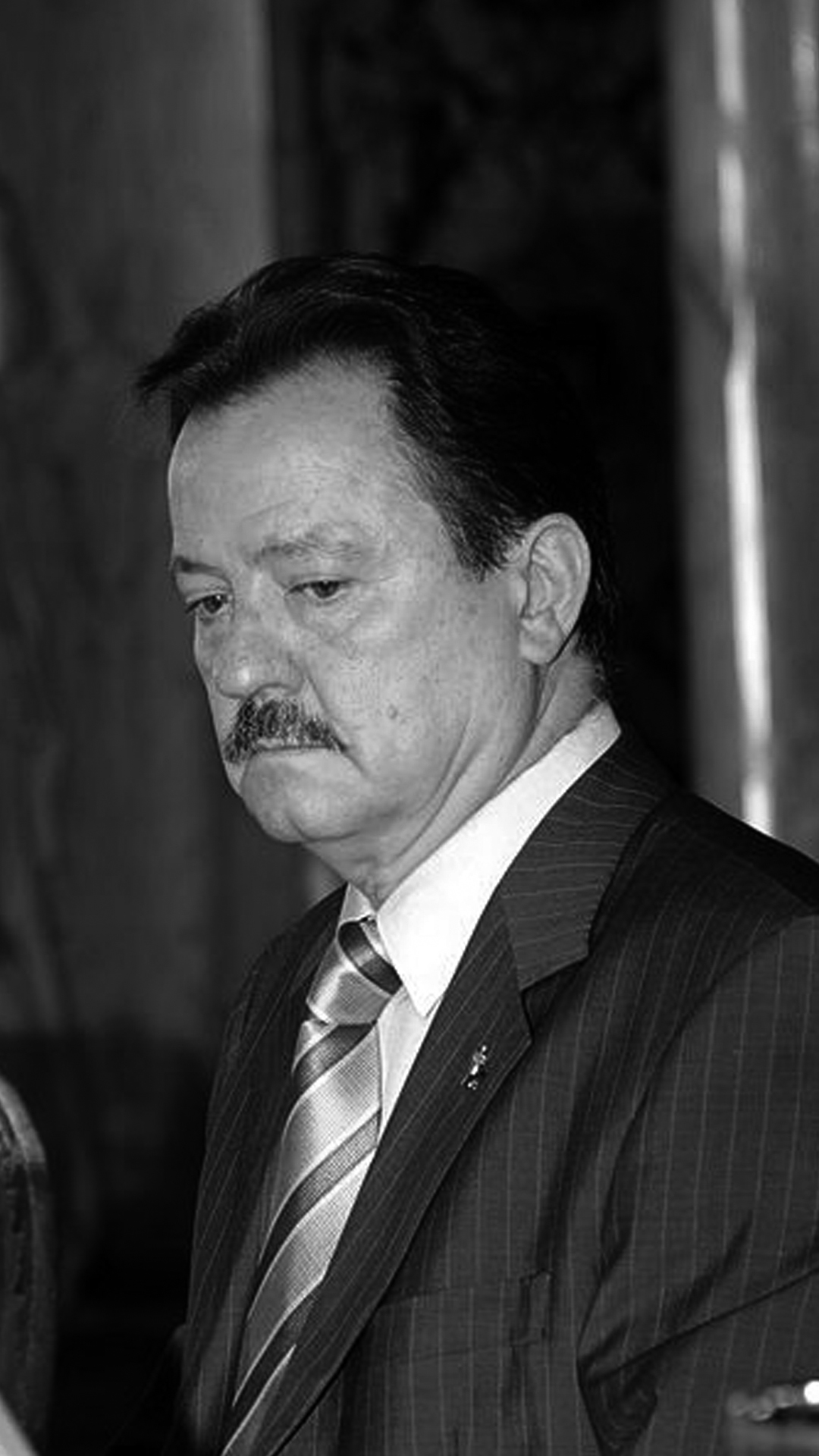
Fernando Pessoa University awarded the degree of Doctor Honoris Causa in Information Sciences (Journalism) to José Manuel Gironés Guillem. The solemn ceremony took place on May 3, 2014, at 10:00 AM, in the UFP Auditorium.
Curriculum
• The seventh of nine siblings, born in 1945, he forged his first worldview apart from them, in the harsh rural environment of the Valencian countryside after the war (at his paternal grandparents' house), which would leave essential traits for his character: an insatiable curiosity for progress; tenacity and passion to test any dogmatic imposition.
• After a brief experience as a “Studentarbeiter” in Germany – which coincided with Kennedy's visit – whom he listened to, along with Konrad Adenauer in Bonn, the day before the famous “Ich bin ein Berliner” – he chose to study journalism at the first university that offered that training, receiving a continuing scholarship that forced him to graduate with an Extraordinary Prize from the University of Navarra in 1967.
• Selected by the Presidency of the Government in Madrid for the 'Momento' project promoted by Laureano López Rodó, to give shape to his ideology – ‘first income per capita, then democracy’ – he moved to Barcelona to work in political reporting for Semanario Mundo, where he was targeted in the first lawsuit initiated by the famous TO P (Tribunal de Ordem Pública – Court of Public Order) established outside the jurisdictional unit to control the freedoms of association, demonstration, and expression. There he published his first book of journalism, Los 90 ministros de Franco (Franco's 90 Ministers); and, in 1972, as a collaborator of Vicente Villar Palasí, the brilliant creator and first Rector of the Universidad Autónoma de Barcelona (Autonomous University of Barcelona), he began his university teaching career and his work in scientific journalism.
• In that same year, he prepared his second book: La Politica Española entre el Rumor y el Humor, efectos del rumor y el humor sobre el sistema de opinión en una dictadura vigilada (Spanish Politics Between Rumor and Humor, Effects of Rumor and Humor on the Opinion System in a Monitored Dictatorship). Seized for two years by the censorship of the dictator Francisco Franco himself, when the book was finally published, the American Congress in Washington incorporated it into its Library, while the author was selected by the United States Embassy in Madrid and the American State Department for the program of visits for future leaders in training.
• This circumstance opened the door to the two major aspects of Dr. Gironés' professional trajectory. The first, as a journalist, led him on a dazzling career, from Cambio 16 to the direction of Semanario Opinióne to the communications advisory role for the Presidency of the Government with Pérez Llorca and Adolfo Suárez. The second, to a process of academic and scientific involvement translated into his doctoral thesis (Universidad Complutense, 1994) on Isomorphisms in the Opinion System, identifying, from the general systems theory, "incompleteness" (Kurt Gödel) and "self-reference" (Douglas Hofstadter) as paradoxical elements inherent in political life and the system of public opinion in current formalized democracies.
• His international involvement with UNESCO's civil network in the Mediterranean (with the Multaqa de las Tres Culturas as his most unique contribution) is the third axis that completes Dr. Gironés's curriculum profile.
Proponent: Prof. Doctor Salvato Trigo
Godfather: Professor Dr. Álvaro Campelo
Yury Petrovich Zinchenko
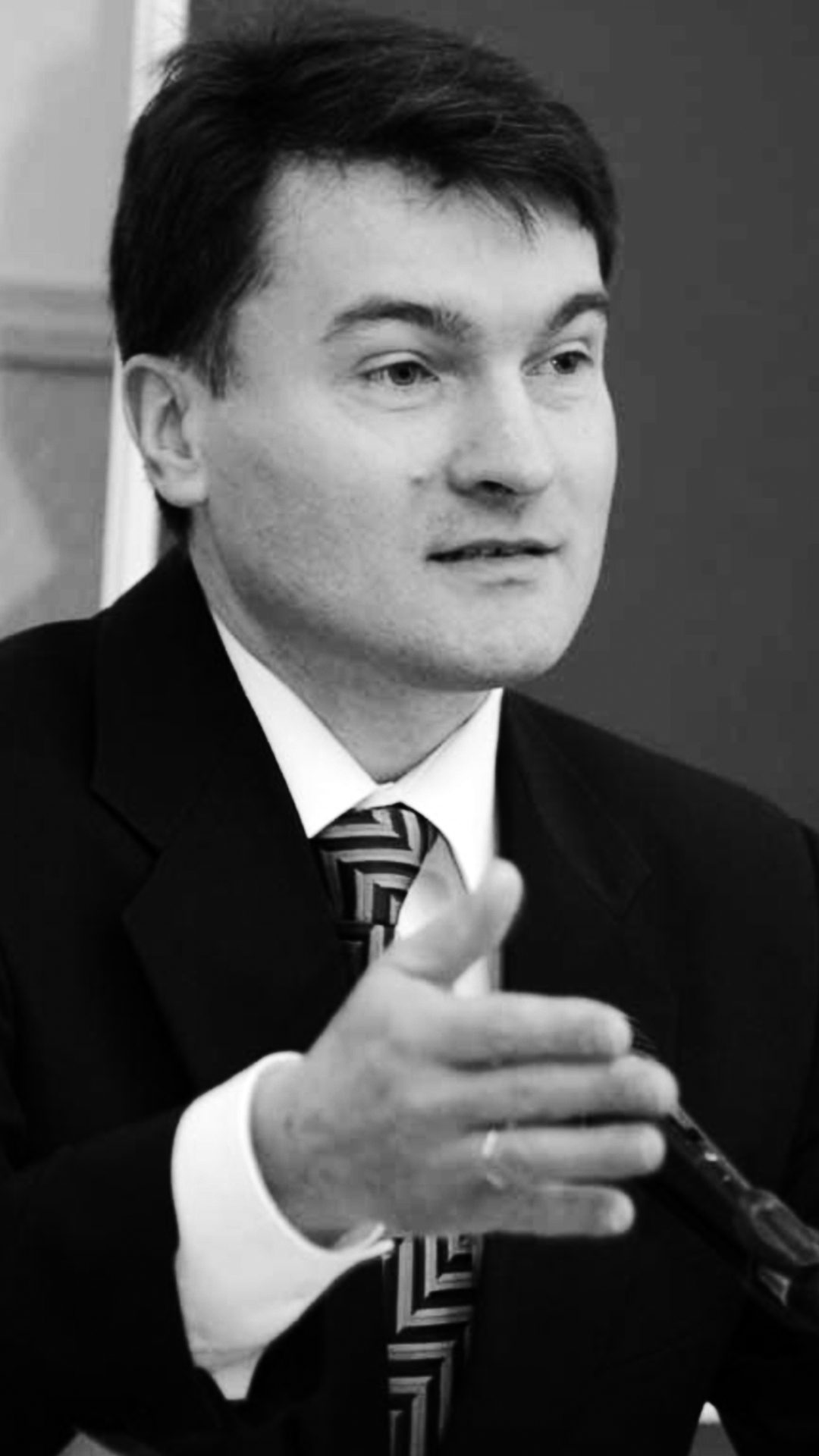
Fernando Pessoa University awarded the degree of Doctor Honoris Causa in Social Sciences (Psychology) to Yury Petrovich Zinchenko. The solemn ceremony took place on July 11, 2014, at 6:00 PM, in the UFP Auditorium.
Curriculum
• In 2003: PhD in Psychology from Lomonosov Moscow State University
• Since 2007: President of the Russian Society of Psychology
• Since 2006: Director of the Faculty of Psychology at Lomonosov Moscow State University
• From 2000 to 2003: Vice-Rector of Lomonosov Moscow State University
• Areas of Research and Study:
Clinical Psychology
Health Psychology
Methodological issues in Psychology
Psychology of Security and Terrorism
Sports Psychology
Educational Psychology
– Historical-Cultural Approach in Psychology
New Information Technologies in Psychology
• Academic Association:
– President of the Russian Society of Psychology
– Member of the Russian Academy of Education
– Member of the Russian Philosophical Society
– Member of the Academic Senate of Lomonosov Moscow State University
– Member of the Presidency of the International Union in Psychological Sciences
– Member of the Presidency of the European Committee on Psychological Education
– Member of the Board of Directors of the International Association for Applied Psychology
– Member of the Paris Psychoanalytic Society
• Participation in Committees: Member of the Education Committee of the Russian Academy of Sciences and other important committees.
• Editorial Positions: editor or member of editorial boards of various scientific publications, namely:
– Psychological Issues (Lomonosov Moscow State University)
– Psychology in Russia: State of the Art (Russian Psychological Society's Association Annual series)
– National Psychological Journal (Moscow)
– Russian Psychological Journal
– Psychology: Online digest of Psychological Science
• Distinctions – 13 honorary distinctions, including:
– Medal from the Russian Non-Governmental Organization “The League of National Health”, for participation in the public project “Russia without smoking” and prevention of smoking among Russian students (2012).
– Copernicus Prize from the Polish Society for Neuropsychology (2012).
– Vygotsky Honorary Prize, awarded by the Vygotsky Institute, Lisbon, Portugal.
– Honorary Professor, Université Sorbonne Nouvelle – Paris 3, Paris, France.
– Honorary Professor, Ludwig-Maximilians-Universität München, Munich, Germany.
– Visiting Professor, City University London, London, United Kingdom.
• Publications (books):
– Vygotsky, une théorie du développement et de l'éducation: recueil de texts et commentaires (Y. Zinchenko and F. Yvon, Eds.). Moscow: MSU, 2012.
– Macro-psychological aspects of Russia Security. Moscow: Optimum Group (co-authored with A. Dontsov, E. Perelygina and O. Zotova), 2012.
– Methodological Issues of Security Psychology. Personality, Society, State. Moscow: MSU, 2011.
– Psychology of Virtual Reality. Moscow: MSU, 2011.
– Psychology of Public Service. Moscow: MSU (co-authored with A. Soroko, A. Potapkin, and V. Fiveisky), 2011.
– Sport Psychology. Moscow: MSU (co-author with A. Tonevitsky, A. Veraksa, S. Isaythchev, S. Leonov et al.), 2011.
– and 13 other scientific books
• Publications (book chapters):
– 22 chapters from scientific books
• Publications (articles):
– more than 30 scientific articles in peer-reviewed publications
Proponent: Prof. Doctor Salvato Trigo
Godfather: Professor Doctor Joaquim Maria Quintino-Aires
In 2008
Paul Ekman
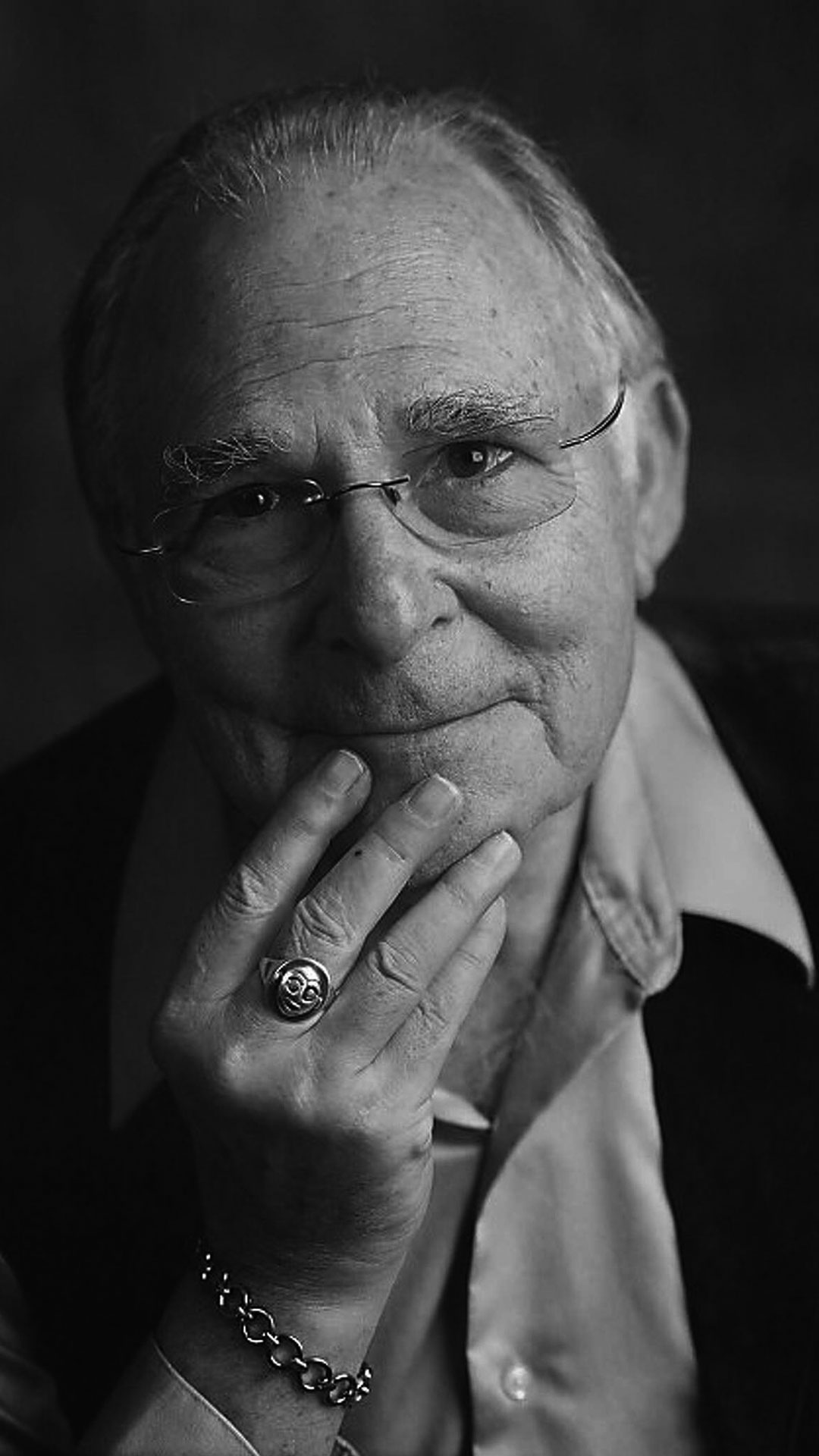
Fernando Pessoa University awarded Paul Ekman an honorary doctorate in Psychology. The ceremony took place on March 31, 2008, at 10:00 AM in the UFP Auditorium.
Curriculum
• Professor Emeritus of Psychology, University of California, San Francisco, USA, since 2004
• Executive Board member of the Santa Barbara Institute for the Study of Consciousness, since 2004
• Director of Paul Ekman Group LLC, 2005
• Director of the Institute of Analytic Interviewing, USA, 2003-2004
• Professor of Psychology, Department of Psychiatry, University of California, San Francisco, USA, 1971-2004
• Associate Professor, Department of Psychology, University of California, Berkeley, USA, since 2000
Awards and accolades:
• Member of the California Academy of Sciences, USA, 2001
• William James Award, American Psychological Society, USA, 1998
• Honorary Doctorate (Doctor of Humane Letters) from the University of Chicago, USA, 1994
• Award of Distinction for Scientific Contribution from the American Psychological Association, 1991
• Scientific Research Award from the National Institute of Mental Health: 1972; also awarded in 1977, 1982, 1987, 1992, 1997 (Career Development Award)
• Gold Medal in the Scientific Film Category, New York International Film Festival, USA, 1976
• Honorary Member of the American Association for the Advancement of Science, 1970
• Honorary Member of the American Psychological Association, 1967
Publications:
• Ekman, Paul et al. (ed.). Emotions Inside Out: 130 Years After Darwin's the Expression of the Emotions in Man and Animals. New York, NY: New York Academy of Sciences, 2003.
• Ekman, Paul. Emotions Revealed: Recognizing Faces and Feelings to Improve Communication and Emotional Life. New York: Times Books, 2003. [translated into German, Italian, Chinese, and Dutch]
• Darwin, Charles. “Introduction,” “Afterword,” and “Commentaries.” The Expression of the Emotions in Man and Animals. Ed. Paul Ekman. Oxford; New York: Oxford University Press, 1998. [translated into German, Dutch, and Japanese]
• Ekman, Paul, and Erika L. Rosenberg (eds.). What the Face Reveals: Basic and Applied Studies of Spontaneous Expression Using the Facial Action Coding System (FACS). New York: Oxford University Press, 1997.
• Ekman, Paul et al. Why Kids Lie: How Parents Can Encourage Truthfulness. New York: Scribner, [1989]. [translated into German, Italian, and Russian]
• Ekman, Paul. Telling Lies: Clues to Deceit in the Marketplace, Politics, and Marriage. New York: Norton, [1985]. [translated into German, Spanish, French, Italian, Japanese, Ukrainian]
• Ekman, Paul et al. Emotion in the Human Face: Guidelines for Research and an Integration of Findings. New York; Pergamon Press, [1972]. [translated into German and Dutch]
• Scherer, Klaus R., and Paul Ekman (eds.). Handbook of Methods in Nonverbal Behavior Research. Cambridge [Cambridgeshire]; New York: Cambridge University Press; Paris: Editions de la Maison des Sciences de l'Homme, 1982.
• Ekman, Paul. The Face of Man: Expressions of Universal Emotions in a New Guinea Village. New York: Garland STPM Press, [1980].
• Ekman, Paul, and Wallace V. Friesen. The Facial Action Coding System: A technique for the measurement of facial movement. Palo Alto, CA.: Consulting Psychologists Press, 1978.
• Ekman, Paul, and Wallace V. Frieseri. Unmasking the Face; a Guide to Recognizing Emotions from Facial Clues. Englewood Cliffs, NJ: Prentice-Hall, [1975]. [translated into Japanese]
Proponent: Professor Armindo Freitas Magalhães, PhD
Godfather: Professor Dr. Carlos Amaral Dias
José Rincon Ferreira
Fernando Pessoa University awarded Paul Ekman an honorary doctorate in Psychology. The ceremony took place on March 31, 2008, at 10:00 AM in the UFP Auditorium.
Curriculum
• Professor Emeritus of Psychology, University of California, San Francisco, USA, since 2004
• Executive Board member of the Santa Barbara Institute for the Study of Consciousness, since 2004
• Director of Paul Ekman Group LLC, 2005
• Director of the Institute of Analytic Interviewing, USA, 2003-2004
• Professor of Psychology, Department of Psychiatry, University of California, San Francisco, USA, 1971-2004
• Associate Professor, Department of Psychology, University of California, Berkeley, USA, since 2000
Awards and accolades:
• Member of the California Academy of Sciences, USA, 2001
• William James Award, American Psychological Society, USA, 1998
• Honorary Doctorate (Doctor of Humane Letters) from the University of Chicago, USA, 1994
• Award of Distinction for Scientific Contribution from the American Psychological Association, 1991
• Scientific Research Award from the National Institute of Mental Health: 1972; also awarded in 1977, 1982, 1987, 1992, 1997 (Career Development Award)
• Gold Medal in the Scientific Film Category, New York International Film Festival, USA, 1976
• Honorary Member of the American Association for the Advancement of Science, 1970
• Honorary Member of the American Psychological Association, 1967
Publications:
• Ekman, Paul et al. (ed.). Emotions Inside Out: 130 Years After Darwin's the Expression of the Emotions in Man and Animals. New York, NY: New York Academy of Sciences, 2003.
• Ekman, Paul. Emotions Revealed: Recognizing Faces and Feelings to Improve Communication and Emotional Life. New York: Times Books, 2003. [translated into German, Italian, Chinese, and Dutch]
• Darwin, Charles. “Introduction,” “Afterword,” and “Commentaries.” The Expression of the Emotions in Man and Animals. Ed. Paul Ekman. Oxford; New York: Oxford University Press, 1998. [translated into German, Dutch, and Japanese]
• Ekman, Paul, and Erika L. Rosenberg (eds.). What the Face Reveals: Basic and Applied Studies of Spontaneous Expression Using the Facial Action Coding System (FACS). New York: Oxford University Press, 1997.
• Ekman, Paul et al. Why Kids Lie: How Parents Can Encourage Truthfulness. New York: Scribner, [1989]. [translated into German, Italian, and Russian]
• Ekman, Paul. Telling Lies: Clues to Deceit in the Marketplace, Politics, and Marriage. New York: Norton, [1985]. [translated into German, Spanish, French, Italian, Japanese, Ukrainian]
• Ekman, Paul et al. Emotion in the Human Face: Guidelines for Research and an Integration of Findings. New York; Pergamon Press, [1972]. [translated into German and Dutch]
• Scherer, Klaus R., and Paul Ekman (eds.). Handbook of Methods in Nonverbal Behavior Research. Cambridge [Cambridgeshire]; New York: Cambridge University Press; Paris: Editions de la Maison des Sciences de l'Homme, 1982.
• Ekman, Paul. The Face of Man: Expressions of Universal Emotions in a New Guinea Village. New York: Garland STPM Press, [1980].
• Ekman, Paul, and Wallace V. Friesen. The Facial Action Coding System: A technique for the measurement of facial movement. Palo Alto, CA.: Consulting Psychologists Press, 1978.
• Ekman, Paul, and Wallace V. Frieseri. Unmasking the Face; a Guide to Recognizing Emotions from Facial Clues. Englewood Cliffs, NJ: Prentice-Hall, [1975]. [translated into Japanese]
Proponent: Professor Armindo Freitas Magalhães, PhD
Godfather: Professor Dr. Carlos Amaral Dias
Leodegario Amarante de Azevedo Filho
The Fernando Pessoa University awarded the degree of Doctor Honoris Causa in Social Sciences (Literary Studies) to Leodegário Amarante de Azevedo Filho (1927-2011). The solemn ceremony took place on June 13, 2008, at 5:00 PM, in the UFP Auditorium.
Curriculum
• Doctor of Letters from the current State University of Rio de Janeiro, in 1962
• Professor Emeritus of the State University of Rio de Janeiro
• Full Professor at the Federal University of Rio de Janeiro
Distinctions, awards and decorations:
• Benjamin Constant Botelho de Magalhães Prize (1951)
• João Ribeiro Prize for literary essay (1958)
• Teacher's Day Award, conferred by the Ministry of Education of Brazil (1961)
• Hermes Fontes Literary Prize, from Casa dos Quixotes (1968)
• Silvio Romero Prize for Literary Criticism (Brazilian Academy of Letters)
• José Veríssimo Prize for Essay and Scholarship (Brazilian Academy of Letters)
• Euclides da Cunha Prize (Brazilian Academy of Letters)
• Banco Regional de Brasília Prize (awarded at the IV National Meeting of Writers)
• Octavio Tarquínio de Sousa Prize
• State Literature Prize (Government of the State of Rio de Janeiro)
• Luís de Camões Prize (Casa de Portugal de São Paulo)
• Anchieta Medal (Government of the former State of Guanabara)
• Oskar Nobiling Medal of Cultural Merit (Brazilian Society of Language and Literature)
• Medal awarded by the Federal University of Alagoas
• Medal awarded by Gama Filho University (as representative of the Minister of State for Education and Culture)
• Title of Citizen of the State of Rio de Janeiro (Legislative Assembly)
• Prize from the Cape Frio Academy of Letters
• Antenor Nascentes Prize for Essay and Scholarship (PEN Club of Brazil)
• Award from the Brazilian Association of Literary Critics
• Honorary Member of the Galician Language Association
• Commander of the Order of Prince Henry the Navigator (Government of Portugal)
• Machado de Assis Prize (Brazilian Academy of Letters)
• Commendation of the Order of National Merit (President of the Portuguese Republic, Dr. Jorge Sampaio)
• Luís de Camões Prize (Brazilian Writers' Union)
• Educational Personality Award 2007 (Brazilian Association of Education, Folha Dirigida Newspaper and Brazilian Press Association)
Selected publications:
• Anchieta, the Middle Ages and the Baroque. Rio de Janeiro, Gernasa, 1966. (José Veríssimo Prize for Essay and Scholarship. Review by Alceu Amoroso Lima)
• Structuralism and Poetry Criticism. Rio de Janeiro, Gernasa, 1970. (Banco Regional de Brasília Prize, at the IV National Meeting of Writers)
• Poetry and Style of Cecília Meireles. Rio de Janeiro, José Olympio Publishing House, 1970. (Octavio Tarquínio de Sousa Prize)
• A Brazilian Perspective on Portuguese Literature. Coimbra, Livraria Almedina Editora, 1973.
• The Songs of Pero Meogo. Rio de Janeiro, Gernasa, 1974.
• The Lyric Canon of Camões. Rio de Janeiro, Gernasa, 1976.
• Camões' Lyric Poetry and the Problem of Manuscripts. Paris, Archives of the Portuguese Cultural Centre, vol. XIII, Calouste Gulbenkian Foundation, 1978.
• History of Portuguese Literature, vol. I: The Poetry of the Galician-Portuguese Troubadours. Rio de Janeiro, EDUFAL/Tempo Brasileiro, 1983.
• Camões' Lyrics, vol. I: History, Methodology, Corpus. Lisbon, Imprensa Nacional-Casa da Moeda, 1985. (Introduction by Antônio Houaiss)
• Luís de Camões: The Instability of Fortune. Rio de Janeiro, SUAM, 1985.
• Camões' Lyrics: Volume 1 of Sonnets. Lisbon, Imprensa Nacional-Casa da Moeda, 1987. (Introduction by Sílvio Elia)
• Portuguese Literature: History and Emergence of the New. Rio de Janeiro, Editora Tempo Brasileiro in partnership with UFF, 1987.
• Introduction to Textual Criticism. Rio de Janeiro, Editora Presença, 1987. (Introduction by Antônio Houaiss)
• Luís de Camões: Ode to the Count of Redondo. Rio de Janeiro, Editora Presença, 1988.
• Camões' Lyrics: Volume 2 of the Sonnets. Lisbon, Imprensa Nacional-Casa da Moeda, 1989.
• Luís de Camões: 13 Images and 1 Poem. Italy, Edizioni dell'Arquata. 1990.
• Camões, the Confusion of the World and the Aesthetics of Utopia. Rio de Janeiro, Brazilian Time, 1995.
• Camões' Lyrics – Songs. Lisbon, Imprensa Nacional-Casa da Moeda, 1996.
• Camões' Lyric Poetry – Odes. Lisbon. Imprensa Nacional-Casa da Moeda, 1997. (Introduction by Roger Bismut)
• Camões' Lyric Poetry – Elegies in Tercets. Lisbon, Imprensa Nacional-Casa da Moeda, 1998.
• Prose works by Cecília Meireles, vol. I, Chronicles in general. Rio de Janeiro, Nova Fronteira, 1998.
• Essays on Linguistics, Philology, and Ecdotics. Rio de Janeiro, State University of Rio de Janeiro, 1998
• Prose work by Cecília Meireles, Travel Chronicles, 3 vols. Rio de Janeiro, Nova Fronteira, 1999.
• Prose work by Cecília Meireles, Chronicles of Education, 5 vols. Rio de Janeiro, Nova Fronteira, 2000.
• Camões: Epic, Lyric, and Dramatic. Rio de Janeiro, Ágora da Ilha, 2001.
• Camões' Lyric Poetry – Eclogues. Volume I. Lisbon, Imprensa Nacional-Casa da Moeda, 2001.
• Eight Essays on Camões. Rio de Janeiro, HP Comunicação, 2004.
• Camonian Studies. Rio de Janeiro, HP Comunicação, 2005.
• The Lusiads by Luís de Camões (facsimile edition). Philological Study by Leodegário A. de Azevedo Filho. Rio de Janeiro, Francisco Alves, 2007.
• Essays on Brazilian Literature. Rio de Janeiro, HP Comunicação, 2007. In memoriam Alice Lós de Azevedo, my Mother.
Proponent: Professor Maria do Carmo Castelo Branco, PhD
Godfather: Professor Doctor Vítor Aguiar e Silva
In 2007
Francisco Alonso Fernandez
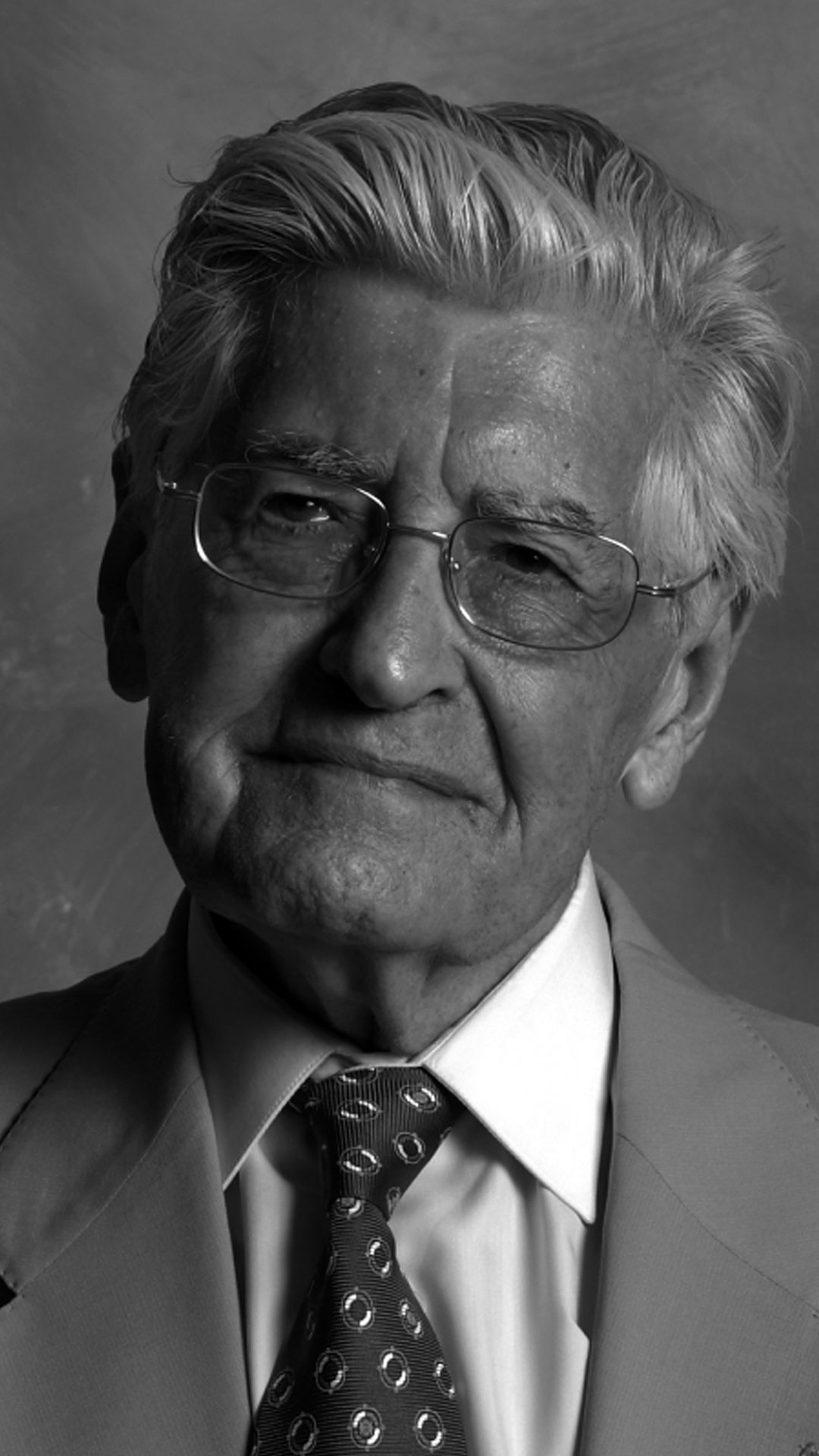
Fernando Pessoa University awarded the degree of Doctor Honoris Causa in Psychology to Francisco Alonso Fernandez. The solemn ceremony took place on June 1, 2007, at 5:00 PM, in the UFP Auditorium.
Curriculum
• 1924: Born in Asturias, Spain
• 1947: Degree in Medicine from the Complutense University of Madrid
• 1967: Wins the Chair of Seville
• 1986: Publishes the "Fourth Dimensional Depression Questionnaire"“
• 1999-2005: President of the European Society for Social Psychiatry
• Since 1994: President of the Institute of Spanish-Speaking Psychiatrists (IPLE)
• Full Member of the Royal National Academy of Medicine
• Corresponding Academician of the Royal Academy of Fine Arts
• Member of the Mexican Institute of Culture
• He holds honorary doctorates from the Universities of Montevideo, Santo Domingo, and Maimonides (Buenos Aureus).
• He is an honorary professor at the Universities of Guadalajara and Mexico (Federal District), Lima (Peru), Havana (Cuba), Carabobo (Venezuela), Ibiza International and Autonomous University of Madrid (Spain).
Awards and accolades:
• National Publius Prize for Medicine (1961)
• Silver Medal of the Spanish Red Cross (1972)
• Asturian Prize of the Year (1981)
• Research Prize in Psychiatry from the Higher Institute of Health Studies in Rome (1988)
• Knight of the Order of the Grand Admiral (2003)
Selected publications:
• The free man and his shadows. Anthropos, Barcelona, 2006.
• El Quijote and its vital labyrinth. Anthropos, Barcelona, 2005.
• The Goya enigma (Goya's personality and his dark painting). FCE, Madrid, 2003.
• New additions. TEA, Madrid, 2003.
• Terrorist fanatics. Salvat, Barcelona, 2002.
• Depression keys. Cooperation, Madrid, 2001.
Proponent: Professor António Fernandes da Fonseca
Godfather: Professor Doctor Gregorio Gómez-Jarabo
Standards and Regulations
These documents establish the principles, rights, and duties applicable to the academic community, ensuring compliance with current legal provisions and promoting proper institutional functioning.
Regularly consulting this information is essential for understanding the rules governing academic and administrative activity, contributing to informed and responsible action on the part of all users.
Consult the Rules and Regulations of the Fernando Pessoa University here
Organic units
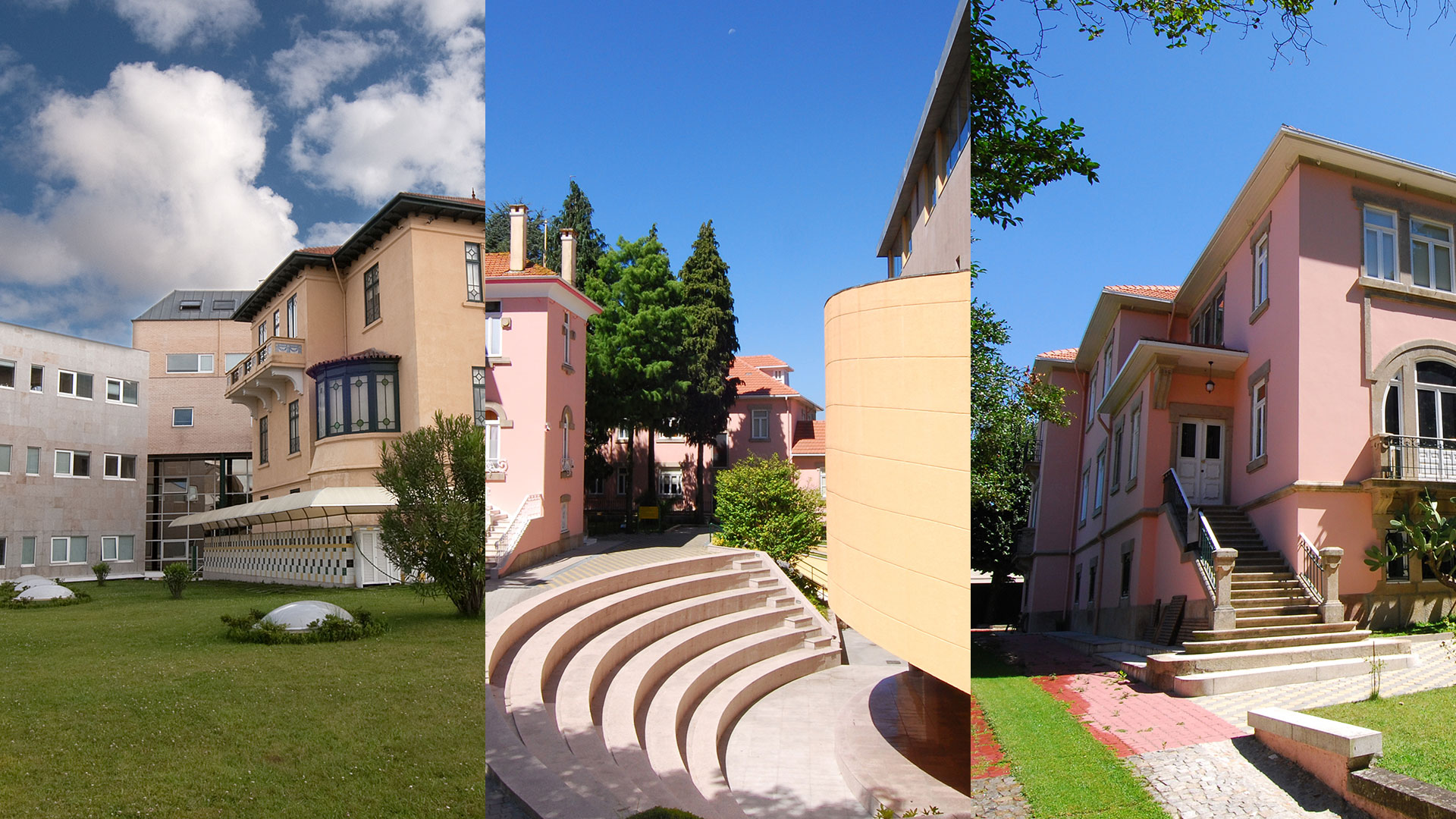
UFP is internally organized into organic units, designated as faculties, institutes, and/or centers, each with its own regulations.
To the organic teaching units In-person classes are designated as faculties, which bring together large scientific, educational, and training domains, pedagogically organized into departments. Currently, UFP includes:
• SCHOOL OF MEDICINE AND BIOMEDICAL SCIENCES (EMCB)
• FACULTY OF SCIENCE AND TECHNOLOGY (FST)
• FACULTY OF HEALTH SCIENCES (FCS)
• FACULTY OF HUMAN AND SOCIAL SCIENCES (FCHS)
The organizational unit that supports in-person teaching and distance learning is called the Distance Learning Center. UFP-UV.
Training offer

The educational offerings of the Fernando Pessoa University (UFP) include Bachelor's, Master's (Integrated and 2nd Cycle), and Doctoral programs, with options for in-person and distance learning (EaD) classes. Within the context of polytechnic education, the Fernando Pessoa Higher School of Health (ESS-FP) He teaches Bachelor's degrees, Master's degrees, and Higher Professional Technical Courses (CTeSP).
• BACHELOR'S AND INTEGRATED MASTER'S DEGREES
• MASTERS
• DOCTORAL DEGREES
• POST-GRADUATE STUDIES
TEACHING STAFF
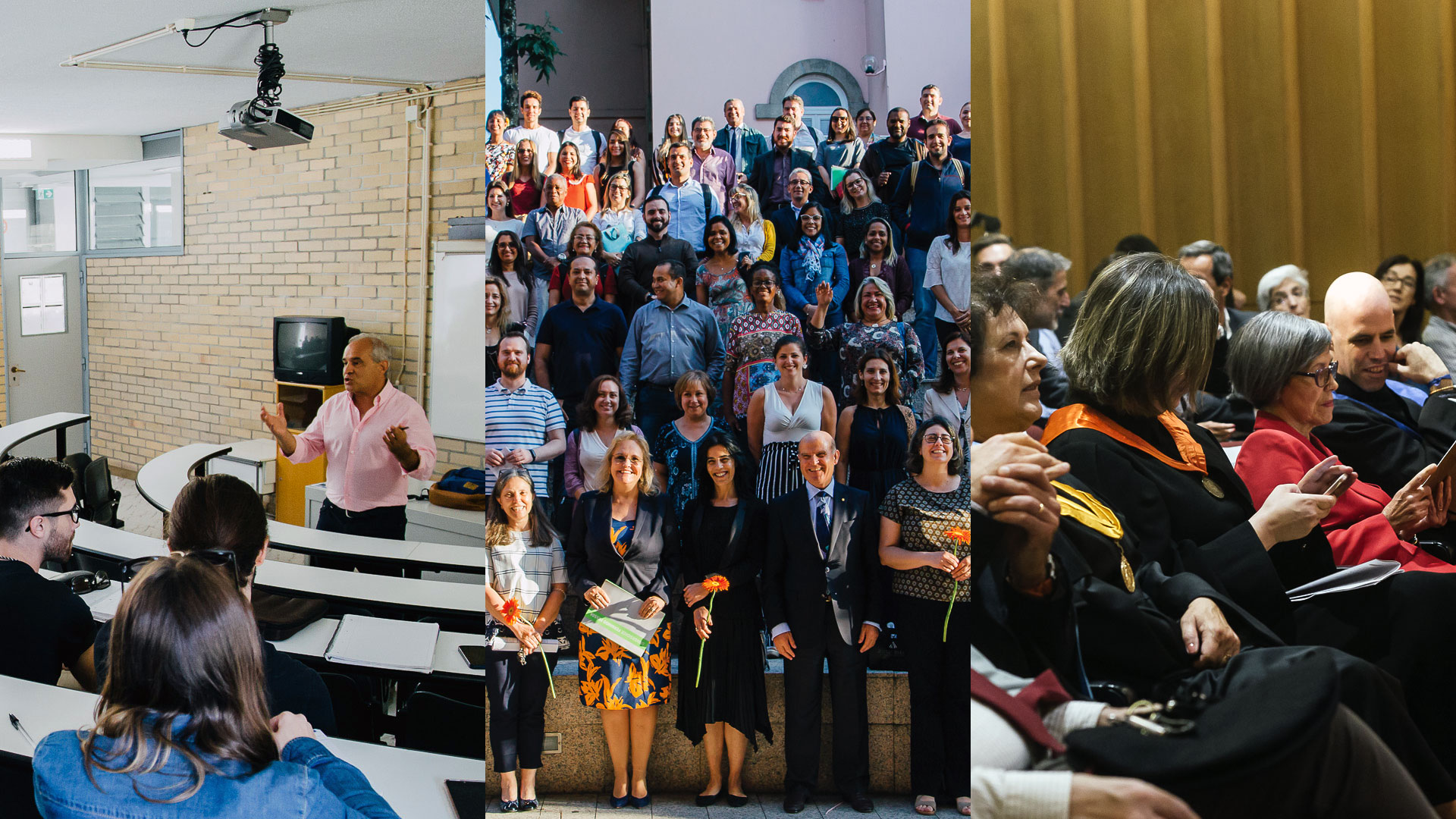
The list of faculty members at Fernando Pessoa University (UFP) is organized by organizational unit for quick reference. Select the desired unit to view the corresponding list of faculty members in a table.
• SCHOOL OF MEDICINE AND BIOMEDICAL SCIENCES (EMCB)
• FACULTY OF SCIENCE AND TECHNOLOGY (FST)
• FACULTY OF HEALTH SCIENCES (FCS)
• FACULTY OF HUMAN AND SOCIAL SCIENCES (FCHS)
Internal Quality Assurance System

Fernando Pessoa University has an Internal Quality Assurance System (IQAS) which is described, in summary, in the Quality Manual (QM) and certified by A3ES:
• The quality policy established by UFP demonstrates the institution's commitment to implementing the requirements of a quality management system (QMS) and providing pedagogical and administrative services that meet the requirements of NP EN ISO 9001:2015 and the guidelines of the European Association for Quality Assurance in Higher Education (ENQA).
• All processes are encompassed within the SIGQ (Integrated Quality Management System), which signifies the involvement of the entire Pessoa community in the objectives of UFP (University of Pessoa), in the continuous improvement of the internal quality assurance system and the maintenance of its effectiveness, assuming the commitment to comply with applicable requirements.
• The implementation of quality assurance mechanisms is the responsibility of the Quality Management System (SIGQ), whose strategic coordination is the responsibility of the Rector, based on the mission, vision, and objectives set out in the Quality Policy. The functional coordination of the SIGQ is the responsibility of the Office for Quality and Support for the Evaluation and Accreditation of Study Cycles (GACE).