The Facial Emotion Expression Lab (FEELab) – the Facial Expression Lab of the Fernando Pessoa University – celebrated 23 years of pioneering work, research, and dedication to the science of the face and emotion on October 9, 2026.
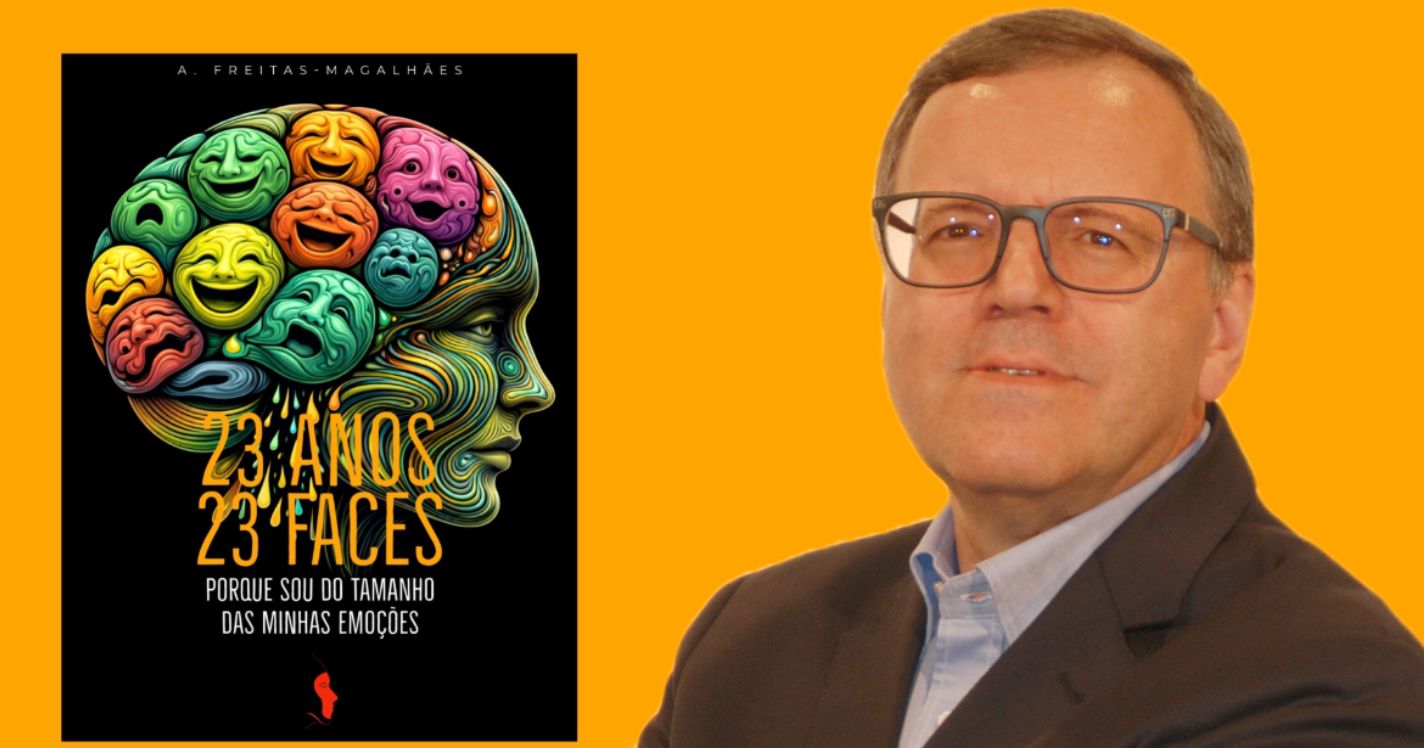
To mark this date, the commemorative book “23 Years, 23 Faces — Because I Am the Size of My Emotions,” authored by Prof. Doutor Freitas-Magalhães, founder and director of FEELab, was published. More than marking an anniversary, this book celebrates a journey. Twenty-three years represent thousands of hours dedicated to observing the human face, scientific research, training researchers and professionals, and seeking answers to one of the most fascinating questions of the human condition: how does what we feel become visible?
The 23 faces that give identity to the work symbolically represent this journey. They are faces of joy and sadness, of fear and surprise, of tension and serenity, of vulnerability and strength. Different faces because human emotion is also plural, dynamic and deeply individual. Each reminds us that studying the face is studying one of the most extraordinary interfaces between the brain, emotion, and human behavior.
Since its creation on October 9, 2003, FEELab has developed a pioneering line of research dedicated to the facial expression of emotion, seeking to understand the mechanisms linking the brain, the face, and emotional experience. Over more than two decades, that scientific work has given rise to new concepts, models, observation methods, and facial coding systems, internationally projecting a unique approach to the science of the face.
The 2026 anniversary therefore has a particular meaning. It is both a memory and a future. It celebrates what has been built and reaffirms the will to continue investigating what is still not understood. Because science advances precisely in this territory: between what we can observe and what we still need to discover.
The cover of “23 Years, 23 Faces” visually conveys this idea. A human head transforms into a universe of faces and emotions. The expressive diversity occupies the space of the brain, in a visual metaphor of the inseparable relationship between brain activity, emotional experience, and facial expression. There is no single face because there is no single way of feeling.
After 23 years, the same scientific curiosity that was the origin of the laboratory remains: looking at the human face and asking what it allows us to understand about ourselves.